
Jump to a Section:
What Is Reiki Healing? A Complete Guide to Reiki Healing for Beginners
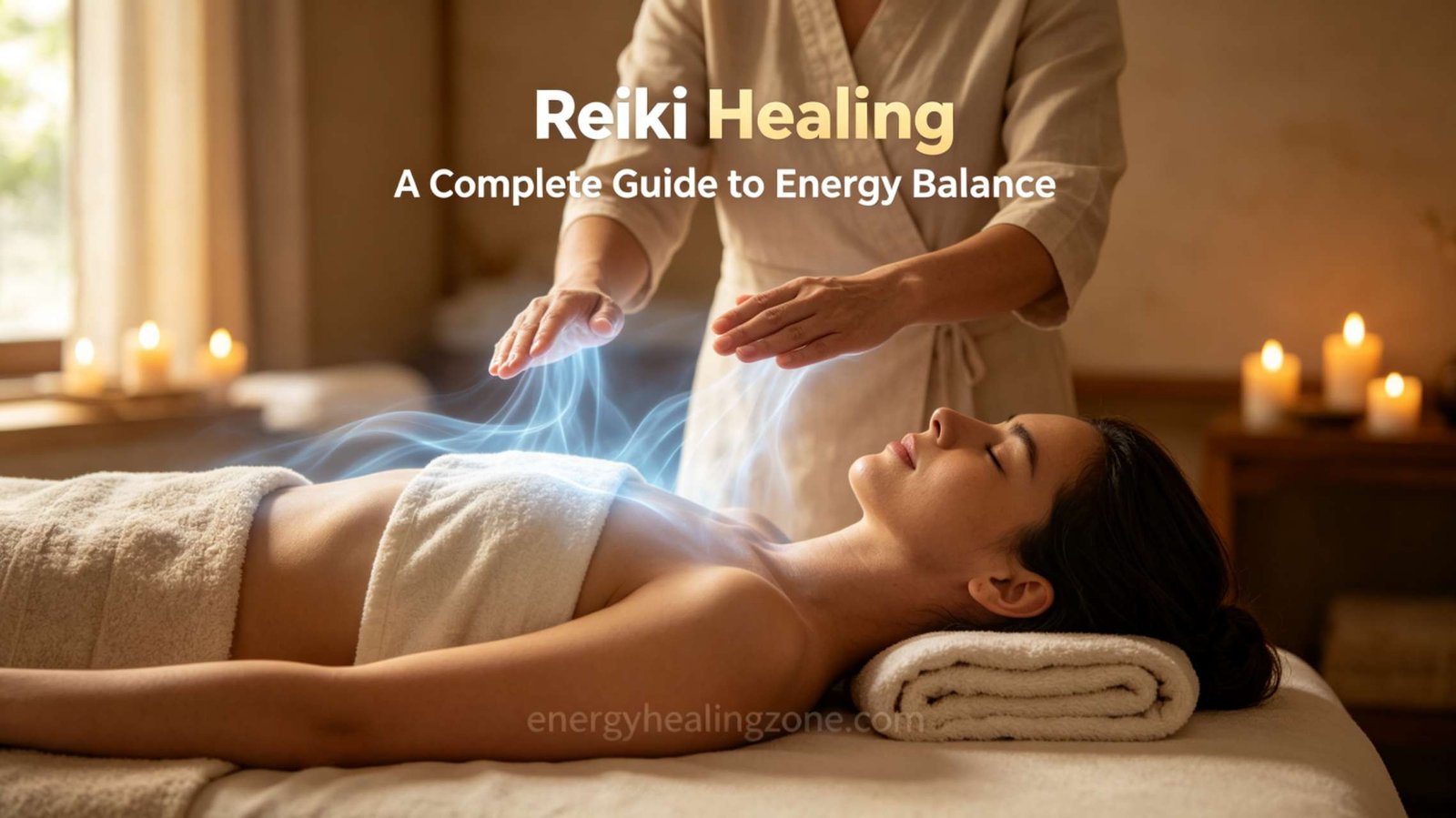
Have you ever walked into a room and felt the energy shift? Or sat next to someone who radiated calm and felt instantly at ease? That subtle, invisible exchange is exactly what Reiki healing works with — a gentle, non-invasive energy practice that restores balance to your body, mind, and spirit. This complete guide to Reiki healing will walk you through everything you need to know.
Reiki (pronounced ray-key) is a Japanese healing technique developed in the early 20th century by Mikao Usui, a Japanese Buddhist monk. The word itself comes from two Japanese characters: Rei (universal) and Ki (life force energy). Together, they mean “universal life force energy.” This is the foundation of any complete guide to Reiki healing.
But here’s the thing: Reiki isn’t a religion, and you don’t need to believe in anything for it to work. It’s a practical, hands-on (or hands-off) healing method that works with the same energy that flows through your 7 chakras. In fact, Reiki and energy healing are deeply connected — both work with your body’s natural energy field.
Today, Reiki is practiced in hospitals, wellness centers, and private clinics worldwide. The National Center for Complementary and Integrative Health (NCCIH) has documented that over 1 million adults in the US use Reiki regularly — and that number is growing rapidly as more people look for natural, drug-free ways to manage stress, pain, and chronic conditions.
In this complete guide to Reiki healing, you’ll discover exactly what Reiki is, how it works, and how you can use it to transform your life. Whether you’re a complete beginner or ready to become a Reiki master, this complete guide to Reiki healing covers everything.
How Does Reiki Work? (The Simple Explanation)
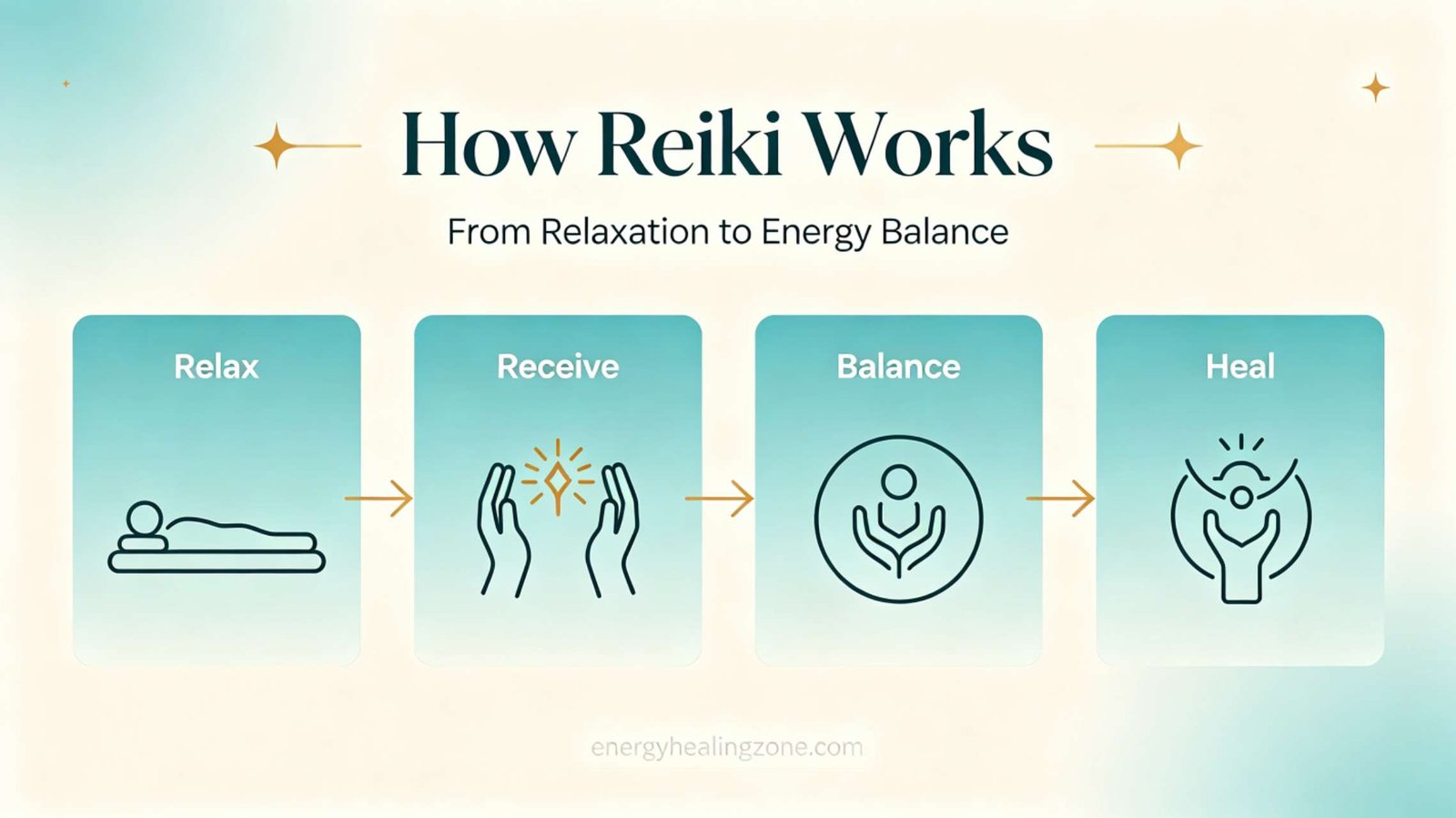
When your body’s energy is flowing freely and evenly, you feel good. You’re healthy, calm, and resilient. But when your energy gets blocked — due to stress, trauma, poor diet, or environmental toxins — that’s when problems start to show up.
Reiki works by clearing these energy blocks and restoring the natural flow of life force energy through your body. The practitioner acts as a channel for healing energy, directing it to the places where you need it most.
Think of it like this: Imagine a river that’s been dammed up with debris. The water isn’t flowing freely, and the plants and animals downstream are suffering. A Reiki session is like someone coming along and gently removing the debris, allowing the river to flow naturally again. Your body’s energy works the same way — when it flows freely, you thrive.
Reiki doesn’t “heal” you in the way a doctor treats a disease. Instead, it supports your body’s natural ability to heal itself. When your energy is balanced and flowing, your body can do what it’s designed to do — heal, repair, and thrive. Reiki simply removes the blocks that prevent that natural healing from happening.
For more information on energy healing research, visit the National Center for Complementary and Integrative Health (NCCIH) which provides evidence-based research on energy healing modalities.
Is Reiki the Same as Energy Healing?
Here’s a question that comes up a lot: Is Reiki the same as energy healing?
The short answer is: Yes, Reiki is a form of energy healing, but it’s not the only one. Energy healing is a broad category that includes various practices like acupuncture, Qi Gong, chakra healing, and sound therapy. What makes Reiki unique is its specific technique of channeling universal energy through the practitioner’s hands.
While energy healing techniques share the common goal of restoring balance and harmony, Reiki has its own philosophy, symbols, and methods that distinguish it from other modalities. This is an important distinction in any complete guide to Reiki healing.
| Modality | Origin | Key Difference from Reiki |
|---|---|---|
| Reiki | Japan | Hands-on/hands-off energy channeling |
| Acupuncture | China | Uses needles to stimulate energy flow |
| Qi Gong | China | Movement-based energy cultivation |
| Chakra Healing | India | Focuses on 7 specific energy centers |
| Sound Therapy | Global | Uses vibration and frequency for healing |
The Science Behind Reiki
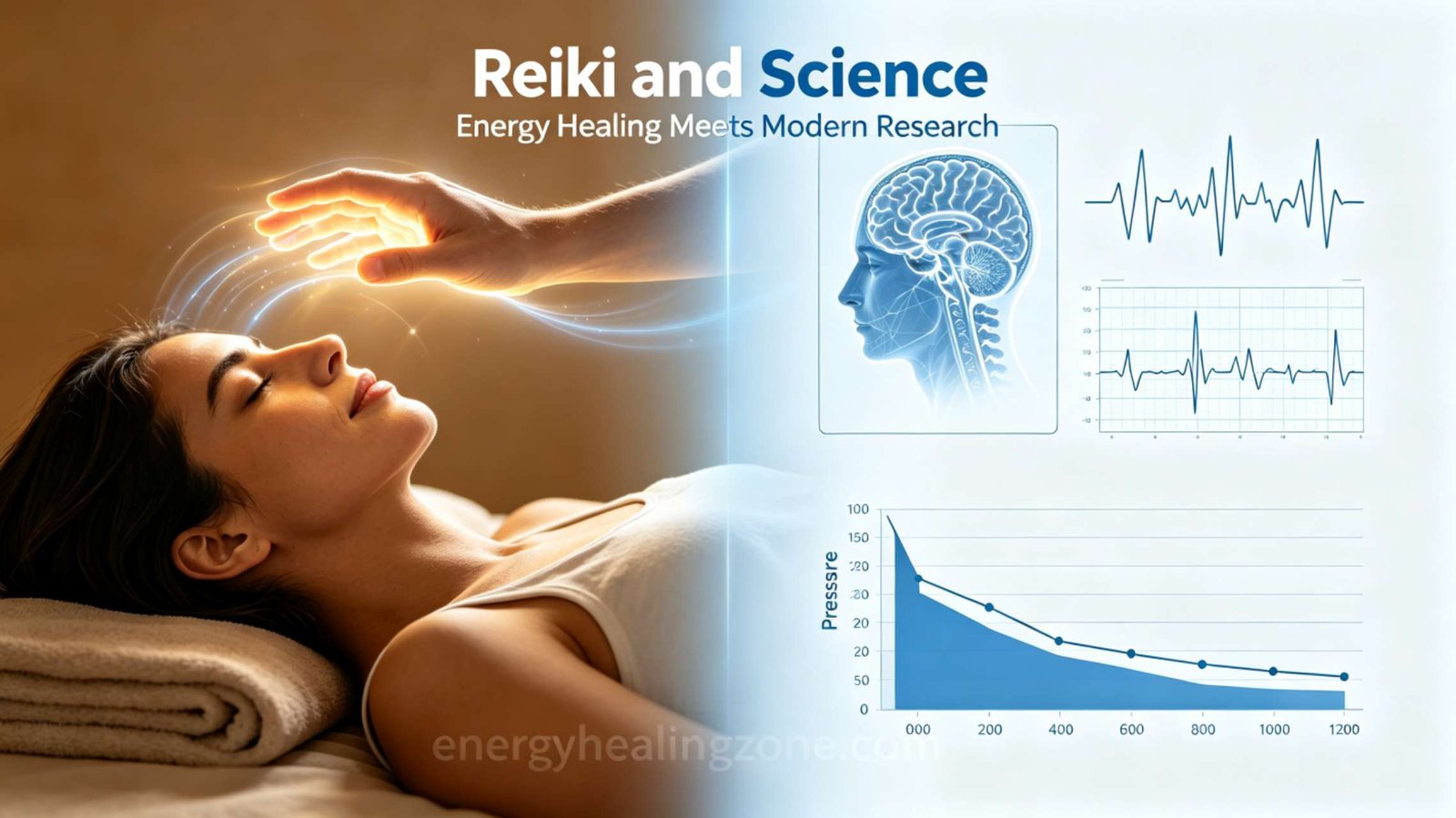
While Reiki is rooted in spiritual and energetic principles, it’s also gaining recognition in the scientific and medical communities. Studies have shown that Reiki can:
- Reduce Stress and Anxiety: Reiki promotes the “relaxation response,” which lowers cortisol levels and calms the nervous system.
- Enhance Healing: Some research suggests that Reiki may improve recovery times after surgery or injury.
- Support Emotional Well-Being: Reiki has been found to reduce feelings of depression, overwhelm, and grief.
For example, a 2015 study published in the Journal of Evidence-Based Complementary & Alternative Medicine found that Reiki significantly reduced stress and anxiety in participants compared to those receiving no treatment.
A 2024 meta-analysis published in the Journal of Clinical Psychology examined multiple randomized controlled trials on Reiki and anxiety. The analysis concluded that Reiki produced significant reductions in anxiety symptoms across all studies reviewed — a strong endorsement for Reiki as a complementary treatment for mental health.
In clinical settings, Reiki is now offered alongside conventional medical care at hospitals including Memorial Sloan Kettering Cancer Center, the Cleveland Clinic, and the Mayo Clinic. These institutions have recognized that Reiki supports patient recovery, reduces medication requirements, and improves quality of life.
📖 Explore the science and skepticism of Reiki →
Benefits of Reiki (Science-Backed)
Physical Benefits
- Relief from tension and pain
- Faster recovery from illness
- Improved sleep quality
- Reduced blood pressure
- Boosted immune function
Emotional Benefits
- Reduced stress and anxiety
- Greater emotional balance
- Release of suppressed emotions
- Improved mood and outlook
- Deep sense of calm
Spiritual Benefits
- Deeper intuition and insight
- Clarity about life purpose
- Sense of peace and gratitude
- Connection to higher self
- Feeling of alignment
Many people describe Reiki as a “reset button” for their energy, leaving them feeling lighter, clearer, and more centered.
Reiki Hand Positions
Reiki sessions typically follow a structured protocol. The practitioner moves their hands through a series of 12 standard hand positions that correspond to major energy centers in the body:
- Crown of the head — spiritual connection
- Third eye area — intuition and insight
- Throat area — authentic communication
- Heart center — love and compassion
- Solar plexus area — personal power
- Sacral area — creativity and flow
- Root area — grounding and security
- Knees and feet — grounding and stability
These positions correlate closely with the 7 chakras and the endocrine system, which makes Reiki and chakra healing a perfect combination. When you clear a blocked chakra, you support your body’s physical and emotional health.
Each hand position is held for 3-5 minutes until the practitioner feels that the energy has stopped flowing to that area. A full session typically lasts 45-90 minutes.
The 4 Reiki Symbols: Meanings and Uses
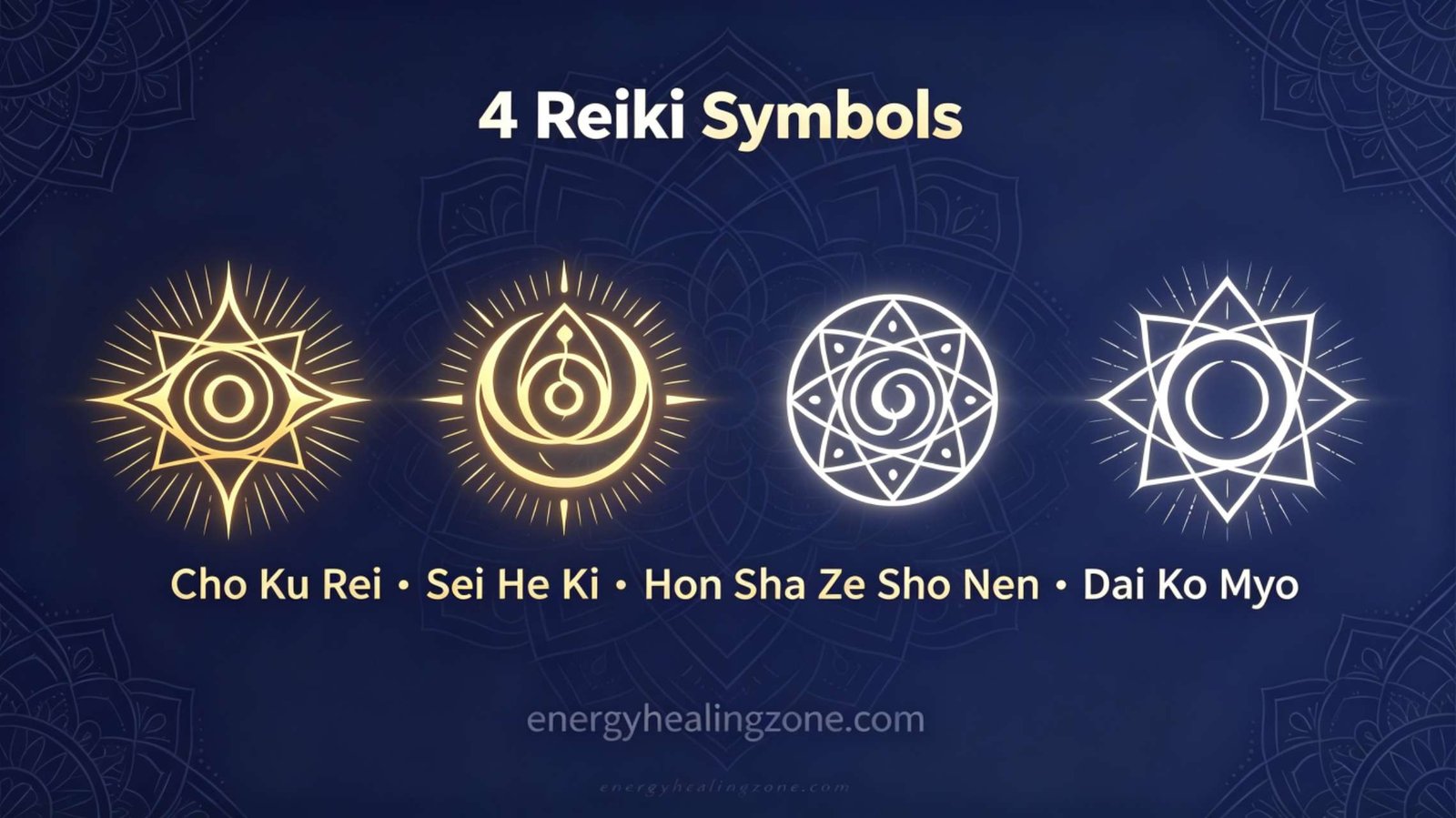
At Reiki Level 2, practitioners are introduced to the sacred Reiki symbols. In the Usui Shiki Ryoho system, these symbols are not just drawings — they are keys that unlock specific frequencies of healing energy.
Cho Ku Rei
Power Symbol
Amplifies Reiki energy, increases power, used for protection, grounding, and clearing spaces.
Sei He Ki
Emotional Symbol
Heals past trauma, releases emotional blockages, promotes forgiveness and mental clarity.
Hon Sha Ze Sho Nen
Distance Symbol
Allows Reiki to be sent across time and space. Used for distance healing.
Dai Ko Myo
Master Symbol
Represents enlightenment, spiritual connection, and the highest vibration of Reiki.
The 5 Reiki Principles (Gokai)
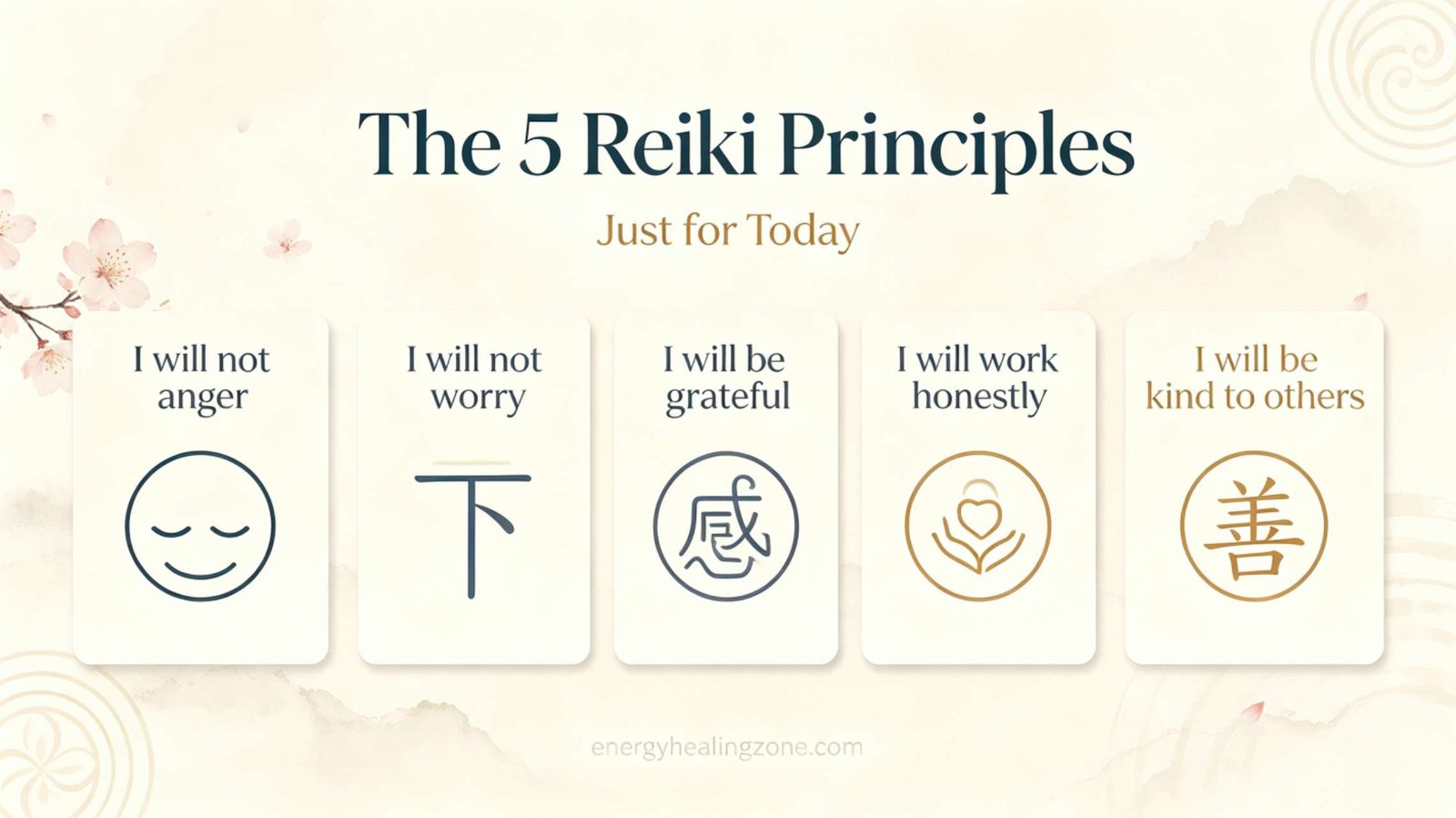
Mikao Usui, the founder of Reiki, created a simple yet profound set of principles to guide practitioners. These aren’t rules to follow — they’re reminders of how to live in alignment with universal energy.
- Just for today, I will not be angry. Anger disrupts your energy flow and creates blocks. Choose peace instead.
- Just for today, I will not worry. Worry pulls your energy out of the present moment. Choose trust instead.
- Just for today, I will be grateful. Gratitude opens your heart and raises your vibration.
- Just for today, I will do my work honestly. Authenticity keeps your energy clear and aligned.
- Just for today, I will be kind to every living thing. Kindness connects you to the universal flow of love and compassion.
Many Reiki practitioners recite these principles at the beginning of each day as a morning ritual. It’s a gentle way to set your intention for the day ahead.
Reiki Distance Healing (Works Anywhere)
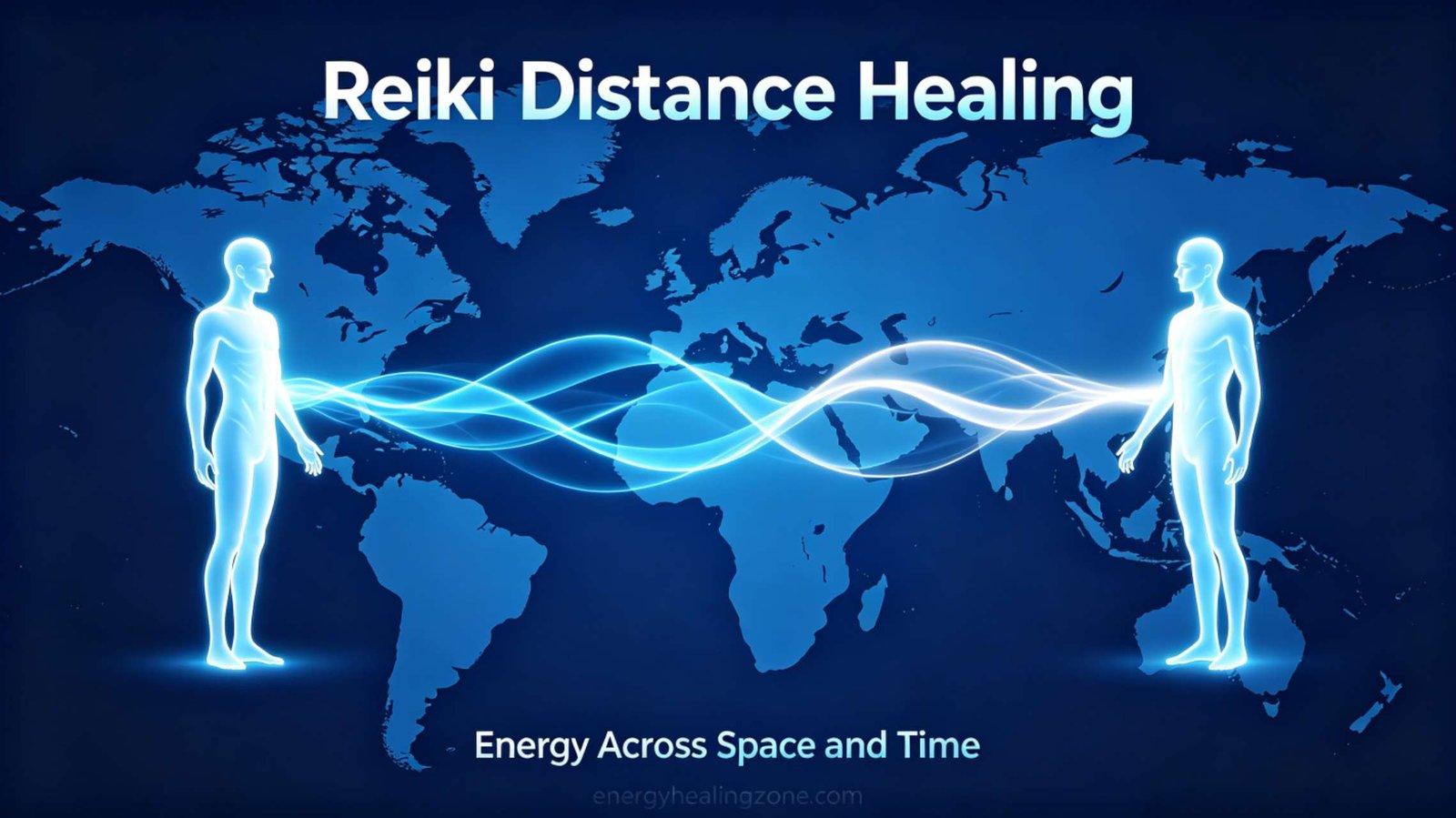
One of the most remarkable aspects of Reiki is that it works across any distance. Reiki practitioners believe that energy is not bound by time or space — it exists everywhere at once. This is a concept that’s widely accepted in quantum physics, where particles can be entangled across the universe and affect each other instantly.
During a Reiki distance healing session, the practitioner connects with you energetically. They visualize you receiving the healing energy and hold the intention of channeling it to you. You simply relax in your own home — or wherever you are — and receive the energy.
Research has shown that distance healing produces results comparable to in-person Reiki. A study published in the Journal of Alternative and Complementary Medicine found that participants receiving distance healing reported significant reductions in pain, anxiety, and fatigue — even though they never met their practitioners in person.
📖 Unlock 10 benefits of Reiki distance healing →
History of Reiki — The Story of Hawayo Takata
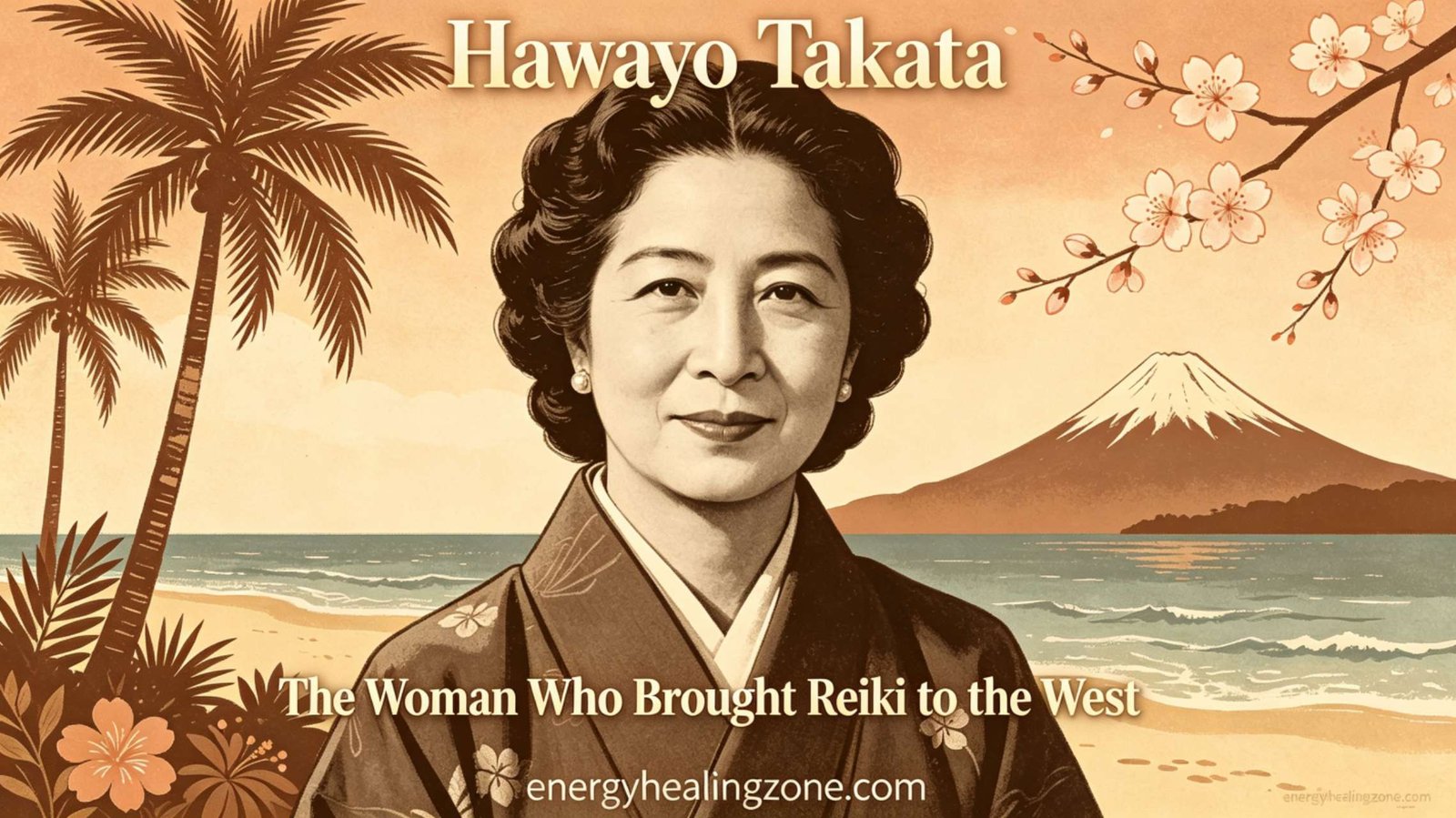
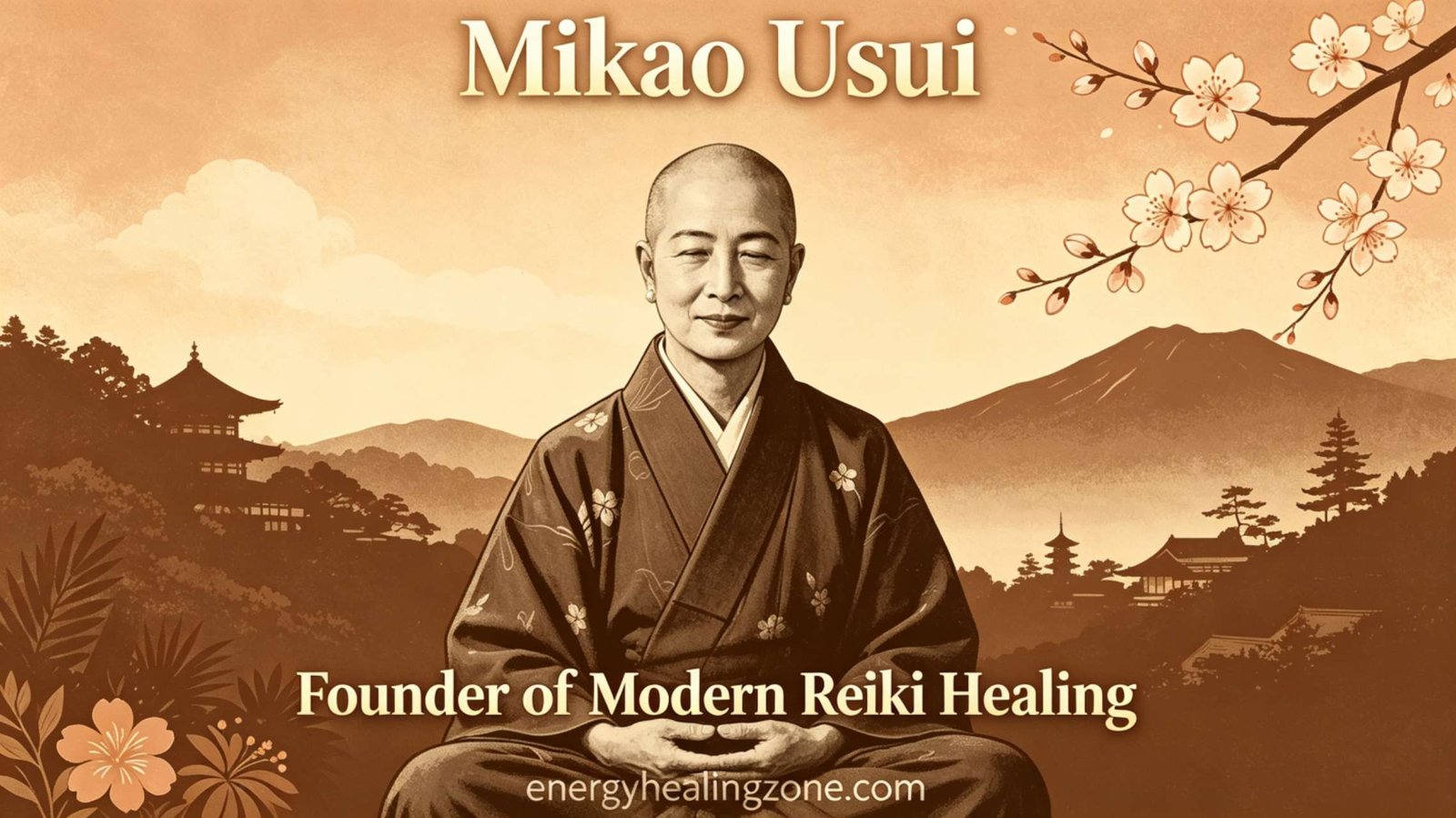
Two Names That Changed Healing Forever
Mikao Usui (1865-1926) — the Japanese Buddhist monk who rediscovered Reiki after a 21-day meditation on Mount Kurama.
Hawayo Takata (1900-1980) — the Japanese-American woman who brought Reiki from Japan to the West in 1937.
To truly understand Reiki, you need to know the story of the remarkable woman who brought it from Japan to the West: Hawayo Takata.
In 1935, Takata was a 35-year-old widow living in Hawaii. She had traveled to Japan to visit her family after the death of her sister. While there, she developed severe abdominal pain, along with a tumor in her uterus, gallbladder issues, and appendix problems. She was admitted to a hospital in Tokyo, where doctors told her she needed surgery.
But something remarkable happened during her hospital stay. Two Reiki practitioners came to treat her each day. The heat from their hands was so strong that Takata was convinced they were using some kind of equipment. She looked around the room but saw nothing. Noticing the large sleeves of one practitioner’s Japanese kimono, she grabbed the sleeves, expecting to find hidden devices — but found nothing. The startled practitioner asked what she was doing. When she explained, he began to laugh. Then he told her about Reiki and how it worked.
Takata received daily Reiki treatments. Over four months, she got progressively better — and eventually, she was completely healed. No surgery was needed.
Impressed by the results, Takata wanted to learn Reiki herself. But she was told that Reiki was Japanese and intended to stay in Japan — it could not be taught to an outsider.
Takata was persistent. She convinced the surgeon at the hospital to ask Dr. Chujiro Hayashi — a Reiki Master who had trained under Mikao Usui himself — to allow her to learn. Dr. Hayashi had wanted to teach Reiki to someone besides his wife, and Takata’s determination impressed him. He decided she should be the one.
In the spring of 1936, Takata received her First Degree Reiki. She worked with Dr. Hayashi for one year and then received Second Degree Reiki.
Takata returned to Hawaii in 1937, followed soon after by Dr. Hayashi and his daughter, who came to help establish Reiki in Hawaii. In the winter of 1938, Dr. Hayashi initiated Takata as a Reiki Master. She was the thirteenth and last Reiki Master he ever initiated.
Between 1970 and her transition in 1980, Takata initiated twenty-two Reiki Masters. Her students went on to spread Reiki across North America, Europe, and around the world. Today, millions practice Reiki in hospitals, wellness centers, and private practices globally — all because one woman refused to be told that healing wasn’t meant for her.
How to Become a Reiki Master (Step-by-Step)
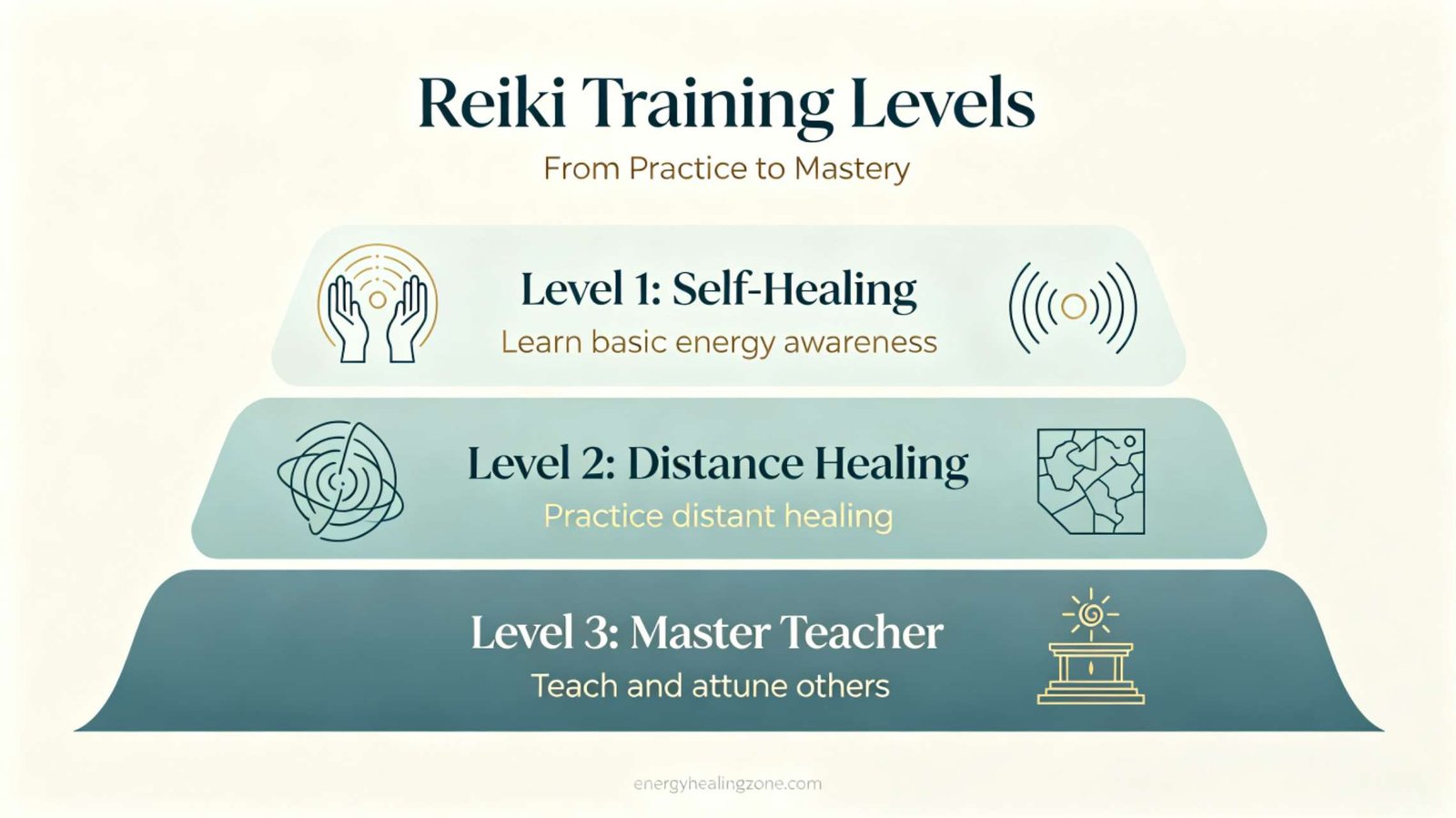
If you’re feeling called to become a Reiki master yourself, you’re not alone. Thousands of people around the world are stepping into this profound healing path — and the journey is more accessible than you might think.
Level 1 (Shoden)
Beginner Level
Learn the fundamentals: what Reiki is, how it works, the hand positions, and how to practice on yourself and others.
⏱ 1-2 days | 💰 $150-$500
Level 2 (Okuden)
Intermediate Level
Learn the sacred Reiki symbols, how to use them, and how to practice distance healing.
⏱ 1-2 days | 💰 $250-$600
Master Level (Shinpiden)
Teacher Level
Learn advanced techniques, the Master symbol, and how to teach and attune others to Reiki.
⏱ 2-5 days | 💰 $500-$3,000+
Is becoming a Reiki master worth it? If you feel a genuine calling to this work, absolutely. Reiki masters report feeling more aligned with their life purpose, greater peace of mind, deeper intuition, and a profound sense of meaning in their lives.
📖 The complete guide to becoming a Reiki master →
How to Find a Trusted Reiki Master
Finding the right Reiki practitioner can feel overwhelming, especially if you’re new to energy healing. Here are some things to look for when choosing a Reiki master or practitioner:
- Verify their training: A legitimate Reiki master will have completed extensive training (usually Level 1, Level 2, and Master Level) and be able to explain their lineage.
- Ask about their experience: How long have they been practicing? Do they specialize in certain conditions or populations?
- Check for reviews: Look for independent reviews online — Google, Yelp, or wellness directories are good places to start.
- Trust your intuition: How does it feel to talk to them? Do they make you feel comfortable, heard, and supported?
- Understand their approach: Some practitioners use hands-on, some hands-off. Some incorporate crystals, essential oils, or other modalities. Choose a style that resonates with you.
Where to find Reiki practitioners:
- Online directories: Websites like the International Association of Reiki Professionals (IARP) and the Reiki Membership Association allow you to search for practitioners in your area.
- Local wellness centers: Many yoga studios, holistic health centers, and integrative clinics offer Reiki services.
- Hospitals and medical centers: As mentioned earlier, many leading hospitals now offer Reiki as a complementary therapy.
- Word-of-mouth: Ask friends, family, or health professionals if they can recommend a practitioner.
📖 Complete guide to finding a trusted Reiki master near you →
Reiki for Pets and Animals

Animals are highly sensitive to energy, which makes them ideal recipients of Reiki. Dogs, cats, horses, and even birds respond remarkably well to Reiki healing — often even faster than humans.
How Reiki Helps Pets
- Reduces anxiety and nervousness
- Supports recovery from illness or surgery
- Relieves pain from chronic conditions
- Deepens the bond between you and your pet
- Calms fearful or reactive animals
How to Give Reiki to Your Pet
- Practice on your pet yourself if trained
- Find a practitioner who specializes in animal Reiki
- Distance sessions work just as effectively
- Animals don’t need to understand Reiki — they just receive it
- Their instinct is to relax and let go
📖 Learn more about pet Reiki healing →
Frequently Asked Questions About Reiki
Can Reiki heal my condition?
Reiki doesn’t “heal” you in the way medicine does. Instead, it supports your body’s natural healing abilities. By clearing energy blocks and restoring flow, Reiki creates the optimal conditions for your body to do what it’s naturally designed to do — heal itself.
Will Reiki work if I don’t believe in it?
Yes. Reiki doesn’t require belief to work. Energy isn’t influenced by whether you believe in it or not. Just like gravity or electricity, energy works regardless of your opinion about it. Many skeptics have been surprised by the benefits they experienced.
Is Reiki a religion?
No. Reiki is a healing practice, not a belief system. It doesn’t require you to adopt any specific spiritual beliefs. You can be Christian, Jewish, Muslim, Hindu, Buddhist, atheist, or agnostic — Reiki works for everyone.
How many Reiki sessions do I need?
It depends on your goals. Some people feel a major shift after just one session. Others benefit from a series of sessions. Start with 4 sessions (one per week) and then assess how you feel.
Can I practice Reiki on myself?
Absolutely. Self-Reiki is one of the most powerful ways to heal yourself. After Level 1 training, you’ll be able to give yourself a full session. Even without training, you can place your hands on tense areas and intend to send healing energy.
What do I feel during a Reiki session?
Everyone experiences Reiki differently. Common sensations include warmth, tingling, deep relaxation, feeling heavy or light, emotional release, and a sense of being held or supported.
Is Reiki safe?
Yes. Reiki is completely safe and has no known negative side effects. It’s non-invasive, gentle, and works alongside any other treatments. It’s safe for pregnant women, children, the elderly, and people with serious medical conditions.
Does Reiki conflict with my medical treatment?
Not at all. Reiki is a complementary therapy — it works alongside conventional medical treatment without interfering. Many doctors actively recommend Reiki to their patients.
References
- Usui, Mikao. The Original Reiki Handbook of Dr. Mikao Usui. 1926.
- National Center for Complementary and Integrative Health (NCCIH). Reiki: What You Need To Know. 2023. https://nccih.nih.gov/health/energy
- Journal of Alternative and Complementary Medicine. Biofield Therapies: Energy Medicine and Clinical Applications. 2022.
- Journal of Clinical Psychology. The Efficacy of Reiki for Anxiety: A Meta-Analysis. 2024.
- International Association of Reiki Professionals. Reiki Research and Clinical Evidence. 2024.
- Mayo Clinic. Complementary and Integrative Medicine: Reiki. 2023.
- Memorial Sloan Kettering Cancer Center. Reiki Therapy for Cancer Patients. 2023.
- Journal of Pain and Symptom Management. Reiki for Pain Management in Chronic Conditions. 2023.
- American Cancer Society. Reiki and Energy Therapies. 2023.
- Pet Reiki Research Network. Animal Reiki: Clinical Outcomes. 2023.
- Takata, Hawayo. The History of Reiki in the West. (Archival records, 1970-1980).
- Hayashi, Chujiro. Reiki Ryoho: The Complete System. (Original manuscripts, 1930s).
Continue Your Reiki Journey
Disclaimer: Reiki is a complementary therapy and should not replace professional medical advice, diagnosis, or treatment. Always consult your healthcare provider for medical concerns.
