
Jump to a Section:
What Is Sound Healing? A Simple Definition
What is sound healing? At its simplest, sound healing is a holistic therapy that uses vibrational frequencies — from instruments like singing bowls, gongs, tuning forks, and the human voice — to promote physical, emotional, and spiritual well-being.
The core idea behind what is sound healing is that everything in the universe, including your body, is made of energy that vibrates at specific frequencies. When your body’s natural frequency falls out of harmony — due to stress, illness, or emotional trauma — sound can help restore balance.
So what is sound healing really about? It’s about using vibration to remind your body of its natural state of balance. Think of it like tuning a musical instrument. When a string is out of tune, the sound is off. Your body works the same way — when your energy is out of tune, you feel off. Sound healing gently brings you back into harmony.
This what is sound healing guide will answer all your questions and show you why this ancient practice is more relevant than ever in our modern, high-stress world.
📖 Earn your Sound Healing Certificate — professional training →
How Is Sound Healing Different from Listening to Music?
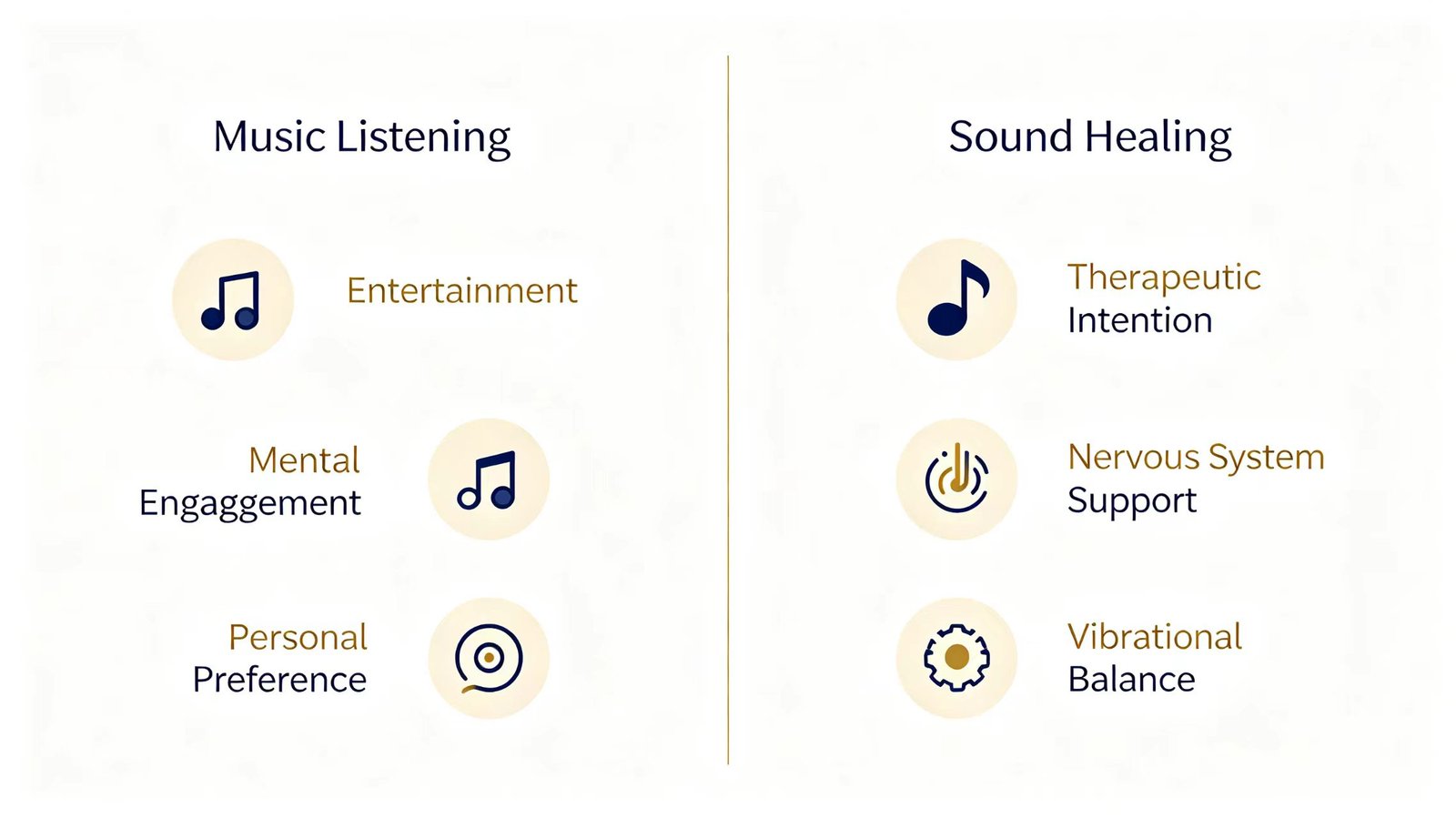
Many people ask what is sound healing and how it differs from simply listening to relaxing music. The answer lies in intention and vibration.
When you listen to music for enjoyment, you’re engaging your mind — you might tap your foot, sing along, or get lost in the melody. Sound healing, on the other hand, works directly on your nervous system and energy body. The sounds are not meant to entertain; they are meant to heal.
| Listening to Music | Sound Healing |
|---|---|
| Engages the mind | Engages the nervous system |
| Entertainment-focused | Healing-focused |
| Varies in frequency and quality | Uses specific healing frequencies |
| Passive listening | Active vibrational experience |
📖 Back to the complete sound healing guide →
The Core Principles of Sound Healing
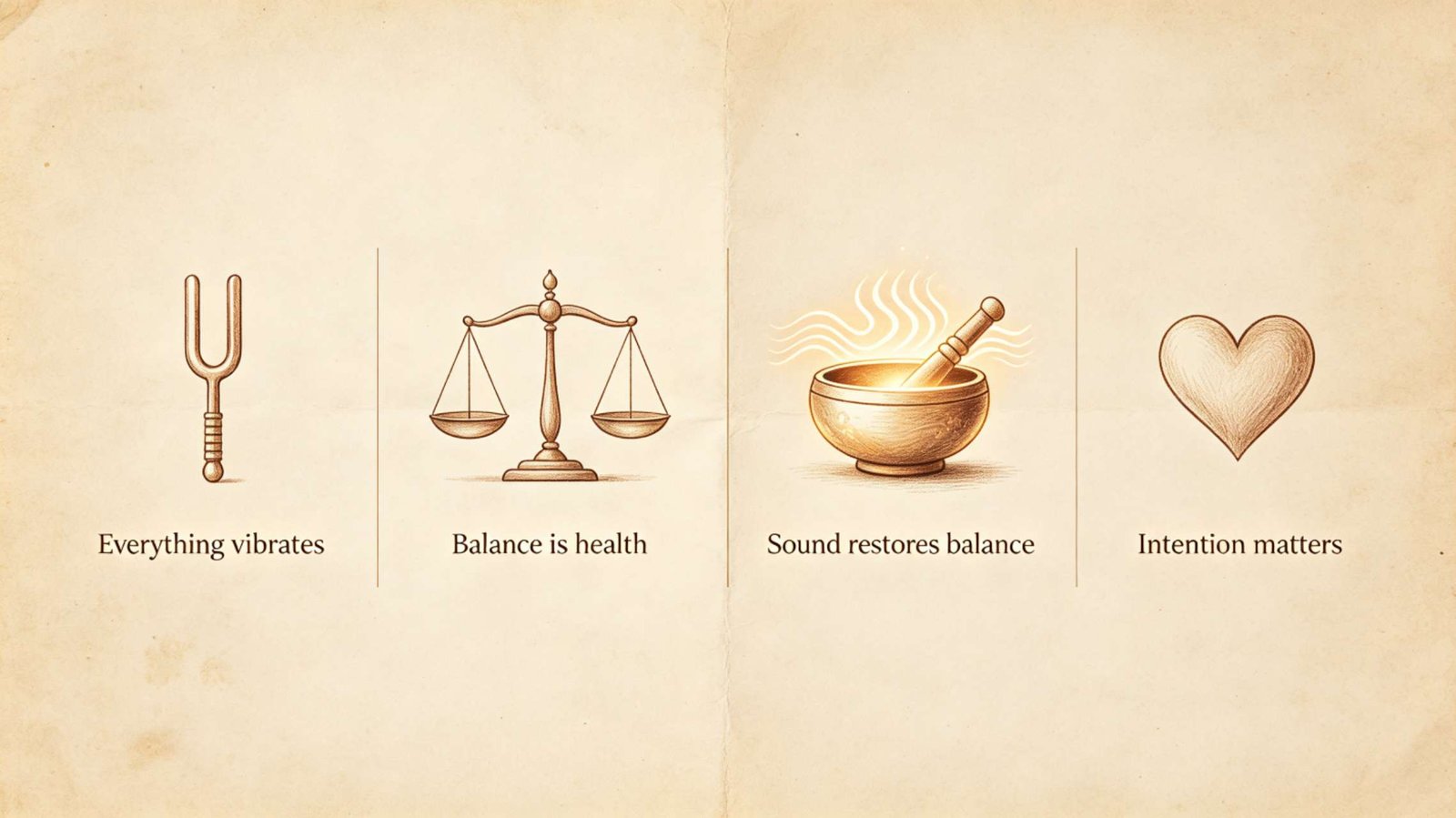
To truly understand what is sound healing, you need to understand the principles that make it work:
- Everything vibrates: Your body, cells, organs, and thoughts all have a vibrational frequency.
- Balance is health: When your body vibrates in harmony, you experience health and well-being.
- Sound can restore balance: Therapeutic sound can gently shift your body’s vibration back to its natural, balanced state.
- Intention matters: The practitioner’s intention — to heal and support — is carried by the sound waves.
These principles are universal. They apply whether you’re using a Tibetan singing bowl, a crystal singing bowl, tuning forks, or even your own voice. This is why understanding what is sound healing is the first step toward using it for your own well-being.
What Happens During a Sound Healing Session?
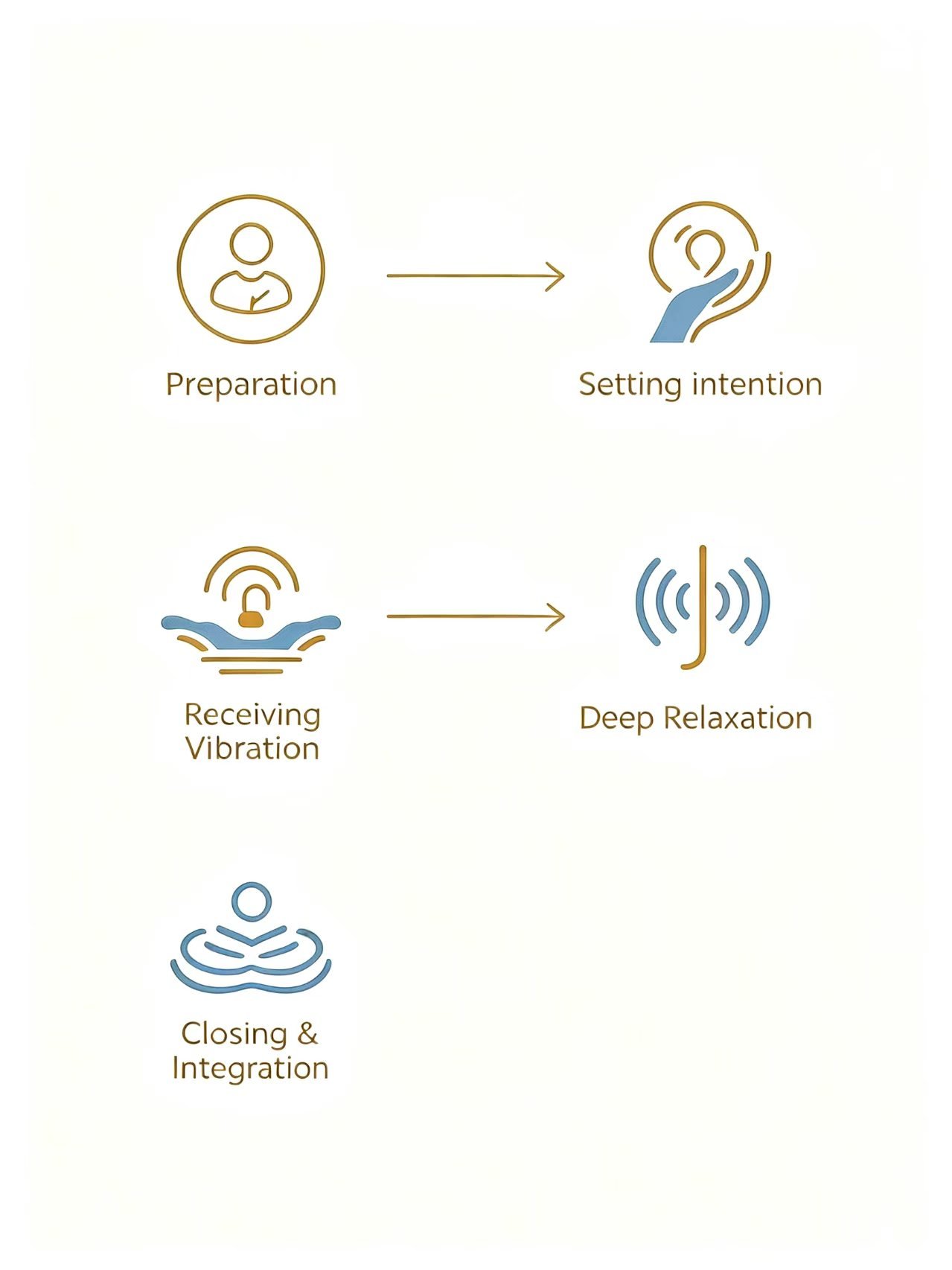
If you’re wondering what is sound healing like in practice, here’s what typically happens during a session:
- You lie down or sit comfortably: Most sessions take place on a massage table or yoga mat. You remain fully clothed.
- The practitioner begins playing: The practitioner uses instruments like singing bowls, gongs, or tuning forks, placing them near or on your body.
- You close your eyes and relax: You simply allow the sound and vibration to wash over you. There is no effort required on your part.
- You may feel sensations: Many people feel warmth, tingling, deep relaxation, or emotional release during the session.
- The session ends gently: The practitioner gradually brings the sound to a close, allowing you to slowly return to full awareness.
A typical session lasts between 45 and 90 minutes. Afterward, many people report feeling lighter, clearer, and deeply rested.
📖 Explore the science-backed benefits of sound healing →
Types of Sound Healing
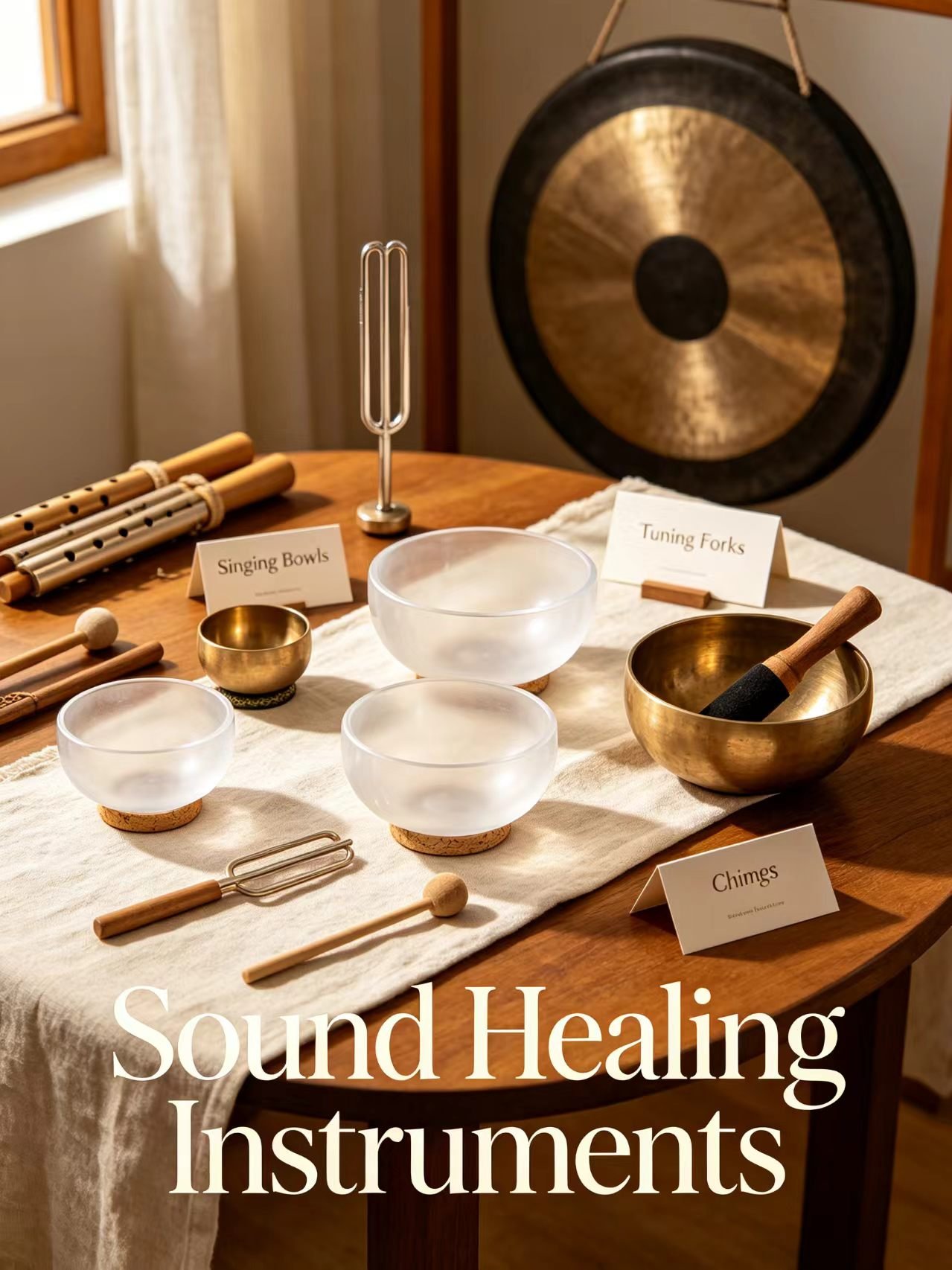
Now that you know what is sound healing, let’s explore the different forms it can take:
1. Singing Bowl Therapy
Tibetan and crystal singing bowls are placed on or near the body. The practitioner plays the bowls to create vibrations that penetrate deeply into the body’s tissues.
2. Tuning Fork Therapy
Precision tuning forks are activated and placed near specific energy points or chakras. They deliver a single, pure frequency to balance the nervous system.
3. Sound Baths
Group sessions where participants lie down while a practitioner plays gongs, bowls, and chimes. The sound “washes” over the participants like water.
4. Vocal Toning
You use your own voice to create healing sounds. Elongated vowels, humming, and chanting are all forms of vocal toning. It’s one of the oldest and most accessible forms of sound healing.
5. Drum Healing
Shamanic drumming uses rhythmic drumming to shift brainwave states and induce deep relaxation or trance states for healing.
6. Vibroacoustic Therapy
This form delivers low-frequency sound and physical vibration through chairs and mats, which may relax muscles, ease pain, and improve circulation.
📖 Explore the complete guide to sound healing instruments →
7 Science-Backed Benefits of Sound Healing
Understanding what is sound healing isn’t complete without knowing the benefits. Here are 7 science-backed benefits:
1. Reduces Stress and Anxiety
Research shows that sound healing significantly reduces depression, anxiety, and stress. A 2026 randomized controlled trial found that sound healing outperformed calming music in reducing psychological distress.
2. Improves Sleep Quality
A systematic literature review (2026) found that sound healing techniques significantly improve sleep quality, with longer periods of sound exposure resulting in more pronounced benefits.
3. Lowers Blood Pressure and Heart Rate
The same 2026 study found that sound healing significantly reduced heart rate and systolic blood pressure.
4. Enhances Mood
A study of 62 participants found that just one sound meditation session with singing bowls reduced tension, anger, fatigue, and depression.
5. Reduces Pain
Sound therapy has been shown to reduce perceived pain by relaxing the body and affecting stress hormones. Research also shows significant reductions in acupoint pain.
6. Improves Cognition and Focus
A review of more than 20 studies found that binaural beats may help with memory and attention. Consistent listening may increase cognitive processing speeds.
7. Supports Spiritual Well-Being
Studies show that sound healing significantly improves spiritual well-being and life satisfaction, helping individuals feel more connected, peaceful, and aligned.
📖 Read the full guide to sound healing benefits →
Is Sound Healing Right for You?
Sound healing is safe, gentle, and accessible to everyone. You don’t need any special skills or beliefs to benefit. Here are some signs that sound healing could be right for you:
- You feel stressed, anxious, or overwhelmed
- You have trouble sleeping or relaxing
- You’re looking for natural, drug-free ways to support your well-being
- You’re curious about energy healing and holistic therapies
- You want to deepen your meditation or spiritual practice
- You’re dealing with chronic pain or fatigue
If any of these resonate with you, sound healing may be exactly what you’re looking for.
📖 Read the full guide to sound healing for anxiety →
Frequently Asked Questions About Sound Healing
Do I need to believe in sound healing for it to work?
No. Sound and vibration affect your body whether you believe in them or not — just like gravity or electricity. The vibration of a singing bowl will still calm your nervous system regardless of your beliefs.
Is sound healing a religion?
No. Sound healing is a therapeutic practice, not a belief system. It can be practiced by anyone, regardless of their spiritual or religious beliefs.
Can I practice sound healing on myself?
Yes. Vocal toning, chanting, and humming are simple ways to practice self-sound healing. You can also use singing bowls or tuning forks if you have them.
How long does a sound healing session last?
Most sessions last between 45 and 90 minutes. Sound baths are typically 60 minutes. Self-practice sessions can be as short as 5-10 minutes.
Is sound healing safe during pregnancy?
Yes, sound healing is generally safe during pregnancy. However, certain instruments (like loud gongs) should be avoided. Consult your practitioner beforehand.
How soon will I feel results from sound healing?
Many people feel immediate relaxation after just one session. However, consistent practice over time yields the most profound and lasting benefits.
Continue Your Sound Healing Journey
Disclaimer: Sound healing is a complementary therapy and should not replace professional medical advice, diagnosis, or treatment. Always consult your healthcare provider for medical concerns.
