
Embarking on the journey to become a Reiki Master is a transformative path that enhances your healing abilities and fosters personal growth. Reiki, a sacred healing practice, channels universal life force energy to promote balance and well-being in recipients.
The path to mastering Reiki involves three progressive levels of training, each building upon the previous to expand your understanding and healing capabilities. As you progress, you’ll learn advanced techniques and deepen your connection to the healing energy that flows through all living beings.
Becoming a Reiki Master is not just about acquiring a certification—it’s about embracing a lifelong journey of service, growth, and healing. This guide walks you through the steps, costs, and benefits associated with this profound practice.
📖 New to energy healing? Understand the fundamentals in our complete guide to energy healing →
✨ Your Reiki Journey Starts Here
Find a trusted practitioner ·
Heal with Pet Reiki ·
Explore the science & skepticism ·
Try distance healing
Key Takeaways
- Understand the three levels of Reiki training and their significance
- Learn about the costs associated with Reiki Mastership training
- Discover the personal and professional benefits of becoming a Reiki Master
- Explore the commitment required for Reiki training
- Gain insights into advanced techniques used in Reiki healing
Understanding Reiki and Its Origins
Understanding the origins of Reiki is essential for anyone looking to become a Reiki Master. Reiki, a holistic, light-touch healing practice, has its roots in ancient Japanese culture.
What is Reiki?
Reiki is a healing system that involves the transfer of energy through the palms to promote relaxation, balance, and well-being. It is based on the principle that an unseen life force energy flows through all living beings, and its balance is crucial for health.
💡 Ready to explore Reiki in action? Discover how to find a trusted Reiki practitioner near you or learn about Pet Reiki for animal healing.

The History of Reiki
Reiki is said to be around 2,500 years old but was rediscovered by a Japanese Buddhist named Dr. Mikao Usui in the early 20th century. Dr. Usui developed the Reiki system after a 21-day meditation retreat on Mount Kurama, where he received a revelation about ancient healing practices.
- The origins of Reiki trace back to early 20th century Japan, where Dr. Usui refined the system
- Dr. Usui’s discovery came from years of studying ancient Buddhist texts
- Reiki was introduced to the Western world by Mrs. Hawayo Takata, who learned from Dr. Chujiro Hayashi
As Reiki spread globally, it branched into various styles, yet all maintain the core principles established by Dr. Usui. The evolution of Reiki from a closely guarded practice to a widely taught modality worldwide is a testament to its universal appeal.
While the benefits are profound, many wonder about the evidence behind this practice. Explore a balanced perspective on Does Reiki Work? Science & Skepticism Explained →
The Three Levels of Reiki Training
The journey to becoming a Reiki Master involves three progressive levels of training, each with unique teachings and practices. Understanding these levels is crucial for anyone looking to embark on this holistic healing path.
Reiki Level 1: The First Step
Reiki Level 1, known as “Shoden” or “First Teaching,” is the foundational level. Students learn the basics of Reiki, including its history, principles, and fundamental techniques. This level focuses on opening the student to the flow of Reiki energy and teaching self-healing and healing others. It lays the groundwork for further training.
Reiki Level 2: The Practitioner Level
Reiki Level 2, or “Okuden,” builds on Level 1 by introducing Reiki symbols and advanced techniques. This level deepens the practitioner’s connection with Reiki energy and enhances their ability to perform more effective healings. Students learn Reiki symbols for distant healing and to amplify Reiki energy. Level 2 is a significant step toward becoming a proficient practitioner.
A key skill gained at this level is the ability to perform distance healing. Learn how to unlock the benefits of Reiki distance healing →
Reiki Level 3: The Master Level
Reiki Level 3, or “Shinpiden” (“Mystery Teaching”), is the highest level and signifies the attainment of Reiki Mastership. Students are taught the Master symbol—considered the most powerful Reiki symbol—and learn how to perform attunements for all three levels. This level includes advanced healing techniques, spiritual development practices, and a deeper understanding of the energetic nature of reality. Becoming a Reiki Master is about embodying the principles of Reiki and being prepared to guide others on their healing path.
| Reiki Level | Key Focus | Teachings |
|---|---|---|
| Level 1 (Shoden) | Introduction to Reiki | Basics, history, principles, fundamental techniques |
| Level 2 (Okuden) | Deepening Reiki practice | Reiki symbols, advanced techniques, distance healing |
| Level 3 (Shinpiden) | Reiki Mastership | Master symbol, attunements, advanced spiritual practices |
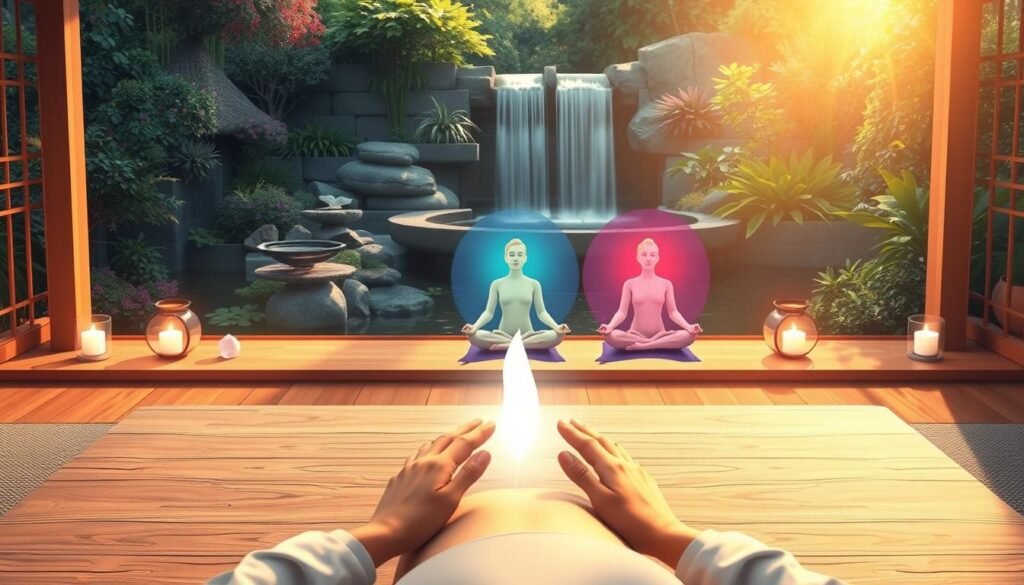
How to Become a Reiki Master: The Complete Journey
The path to Reiki Mastership is a transformative journey that involves more than learning techniques—it’s about integrating Reiki into your life. This journey requires embodying the principles of Reiki in your daily existence.
Setting Your Intentions and Goals
Start by setting clear intentions and goals for your Reiki journey. Understand what you hope to achieve through Reiki and commit to the process. Your intentions may relate to personal healing, spiritual growth, or professional development.
Finding the Right Teacher and Training Program
Finding a qualified Reiki teacher who can guide you through the levels is vital. Ask potential teachers about their approach, the time spent practicing attunements, and their overall teaching philosophy. A good teacher imparts knowledge and provides a supportive environment for your growth.
For a comprehensive directory, visit the International Center for Reiki Training.
The Commitment Required
Becoming a Reiki Master requires significant time for training, practice, and self-healing. The journey typically spans at least 1-2 years, during which you dedicate yourself to daily self-practice and continued study between formal levels. As one Reiki Master noted, “Reiki is not just a technique; it’s a way of life that requires dedication and commitment.” This journey is as much about personal growth as it is about mastering techniques.
| Level | Time Commitment | Key Focus |
|---|---|---|
| Reiki Level 1 | 1-2 days | Introduction to Reiki, self-healing |
| Reiki Level 2 | Several months to a year | Practice, distance healing, symbols |
| Reiki Level 3 (Master) | 1-2 years total journey | Mastery, teaching, attunements |
True mastery comes from experience and embodying Reiki principles in your daily life, not just from completing courses or receiving certificates.
Reiki Level 1 Training in Detail
Embarking on the journey to become a Reiki Master begins with understanding the foundational Level 1 training. This initial level introduces you to the principles and practices of Reiki, setting the stage for further training.
What You’ll Learn in Level 1
During Reiki Level 1 training, you’ll learn the basics of Reiki, including its history, principles, and hand positions for self-healing and healing others. The training includes an attunement process, where a Reiki Master opens your energy channels to connect with universal life force energy. This level focuses on teaching you to practice Reiki on yourself and others, promoting physical, emotional, and mental well-being.

Cost and Time Investment
The cost of Reiki Level 1 training typically ranges from $150 to $300, depending on the teacher’s experience, location, and format (online or in-person). The time investment is usually 1-2 days of in-person training, though some teachers spread it across several sessions. Beyond formal training, it’s recommended to spend 21 days practicing self-Reiki daily to fully integrate the energy.
Reiki Level 2 Training in Detail
Reiki Level 2 training is a significant step in a practitioner’s journey, building on foundational skills learned in Level 1. Practitioners are introduced to more advanced techniques and symbols that enhance their ability to channel and apply Reiki energy.
Advanced Techniques and Symbols
In Reiki Level 2, practitioners learn Reiki symbols used to focus healing intentions and strengthen their connection to universal life force energy. These symbols are considered sacred and are used in various practices to enhance treatment effectiveness. The training typically includes a second attunement to further develop the practitioner’s skills.
“The Reiki symbols are a powerful tool that allows practitioners to tap into the universal energy and direct it towards healing.”
Cost and Requirements
The cost of Reiki Level 2 training typically ranges from $250 to $400. Most Level 2 courses require completion of Level 1 and a waiting period of at least 21 days to 3 months between levels. The time investment is usually 1-2 days of training (8-16 hours), with some teachers requiring additional practice sessions or case studies.
Some Reiki traditions require students to demonstrate proficiency in Level 1 techniques before advancing, while others are more flexible. Many teachers expect students to have been practicing self-Reiki regularly since Level 1.
Reiki Master Training in Detail
Reaching the level of Reiki Master is a significant milestone, representing deep understanding and mastery of Reiki principles and techniques.
Mastering the Symbols and Attunements
Reiki Master training delves into the symbols and attunements fundamental to the practice, teaching advanced techniques to connect with and channel Reiki energy effectively.
Cost and Prerequisites
The cost of Reiki Master training ranges from $400 to $1,000, depending on the instructor’s experience. Prerequisites include completing previous levels and demonstrating a commitment to the practice.
Choosing the Right Reiki School and Teacher
Your path to Reiki mastery starts with identifying a suitable Reiki school and teacher. This decision significantly influences your training experience and future practice. Consider your goals and how you intend to use your Reiki skills.
Evaluating Curriculum and Teaching Methods
When evaluating a Reiki program, examine the curriculum and teaching methods. A comprehensive curriculum should cover both theoretical knowledge and practical experience. Ensure the teaching methods align with your learning style, whether you prefer hands-on training or detailed written materials.
Online vs. In-Person Training
Deciding between online and in-person Reiki training depends on your personal preferences and practice goals. Online courses offer flexibility and accessibility, while in-person training provides direct experience and immediate feedback. Some schools offer hybrid models combining both forms. Ultimately, your training’s effectiveness depends on the teacher’s skill, your receptivity, and your commitment to practice.
Preparing for Your Reiki Training
Preparing yourself physically and mentally before Reiki training can significantly enhance your learning experience.
Physical and Mental Preparation
Physical preparation involves creating a conducive environment for healing and energy work—maintaining a healthy lifestyle, being well-rested, and minimizing stress. Mentally, cultivate an open and receptive mindset, letting go of preconceptions about Reiki. Meditation and mindfulness practices can help achieve this mental clarity.
Recommended Reading and Resources
Supplement your Reiki training with relevant reading materials. Books such as “The Reiki Manual” by Penelope Quest and “Essential Reiki” by Diane Stein offer valuable insights. Resources on energy anatomy, meditation, and spiritual development can enhance your understanding of Reiki’s context.
The Benefits of Becoming a Reiki Master
Becoming a Reiki Master offers numerous benefits. You can experience profound personal growth and healing while unlocking new professional opportunities.
Personal Growth and Healing
As a Reiki Master, you undergo significant personal growth and healing. This journey helps you develop spiritually, emotionally, and mentally. Through Reiki practice, you achieve a deeper understanding of yourself and the world around you. The process involves intense self-reflection and healing, leading to a more balanced and fulfilling life.
Professional Opportunities
Reiki Mastership opens various professional opportunities. Many practitioners start private practices or integrate Reiki into existing professions like massage therapy, acupuncture, or nursing. As a Reiki Master, you can:
- Establish a private healing practice
- Teach Reiki classes and offer attunements
- Develop specialized workshops, retreats, and healing products
- Complement your existing healthcare or wellness career
With growing acceptance of complementary therapies in mainstream healthcare, Reiki Masters are finding new opportunities in integrative medicine settings. Many also volunteer in hospitals, hospices, and crisis centers.
Potential Earnings as a Reiki Master
Your potential earnings as a Reiki Master vary based on teaching, private sessions, and other business ventures. The median hourly rate for related professions is around $28.
Setting Up Your Reiki Practice
To maximize earnings, Reiki Masters can teach classes with prices ranging from $150 to $300 per student. This provides significant income, especially for those who attract large numbers of students.
Additional Income Streams
Reiki Masters can also generate income through retreats, selling Reiki-related products, and workshops. Diversifying income streams increases overall earnings potential.
Conclusion
To truly become a Reiki Master, one must surrender to the spirit of Reiki, allowing it to guide every aspect of life. This journey is not just about mastering a technique but embodying the principles of compassion, balance, and healing. As a certified Reiki Master, you can experience profound personal growth, spiritual development, and the joy of teaching others. The path requires dedication, practice, and a genuine desire to serve others through healing. While technical aspects can be learned relatively quickly, true mastery is a lifelong process of deepening one’s connection to universal life force energy.
📌 Continue Your Reiki Exploration
📖 Related: New to energy healing? Start with our complete beginner’s guide →
FAQ
What is the typical cost of Reiki training?
The cost of Reiki training varies by level and program. Level 1 costs $100-$300, Level 2 costs $200-$500, and Reiki Master training costs $1,000-$2,000 on average.
How long does it take to become a certified Reiki Master?
It typically takes several months to a few years to complete all three levels of Reiki training, depending on your pace and the training program.
What are the benefits of becoming a Reiki Master?
Benefits include personal growth, healing, and professional opportunities. As a Reiki Master, you can help others heal and grow while building a meaningful career.
Can I practice Reiki on others after completing Level 1 training?
Yes, you can practice Reiki on others after Level 1, but continuing to Level 2 and Master level deepens your understanding and skills.
What is the difference between online and in-person Reiki training?
Online training offers flexibility and convenience, while in-person training provides hands-on experience and immediate feedback. Both have benefits—choose based on your learning style.
Can I become a Reiki Master with no prior energy healing experience?
Yes, Reiki training is accessible to beginners. Many programs welcome individuals with no prior experience.
What kind of support can I expect during Reiki training?
Programs typically offer support through online resources, in-person classes, and mentorship from experienced teachers. Support levels vary by program.