
Jump to a Section:
Unlock deep meditation effortlessly. Kasina brings 50+ sound‑light programs for stress relief, better sleep and sharper focus.
What Is Sound Healing for Anxiety?
Sound healing for anxiety is a holistic practice that uses vibrational frequencies — from singing bowls, tuning forks, gongs, and the human voice — to calm the nervous system, reduce stress, and promote emotional balance. This complete guide to sound healing for anxiety will help you understand how sound can be one of the most effective natural tools for managing anxiety.
Anxiety affects millions of people worldwide. While medication and therapy are essential for many, sound healing for anxiety offers a complementary, drug-free approach that works directly on your nervous system. The gentle vibrations of sound can shift your brain from a state of stress to one of deep relaxation — often within minutes.
This guide to sound healing for anxiety covers how it works, the science behind it, the best frequencies to use, and simple techniques you can try today — anywhere, anytime.
📖 Back to the complete sound healing guide →
How Sound Healing Reduces Anxiety
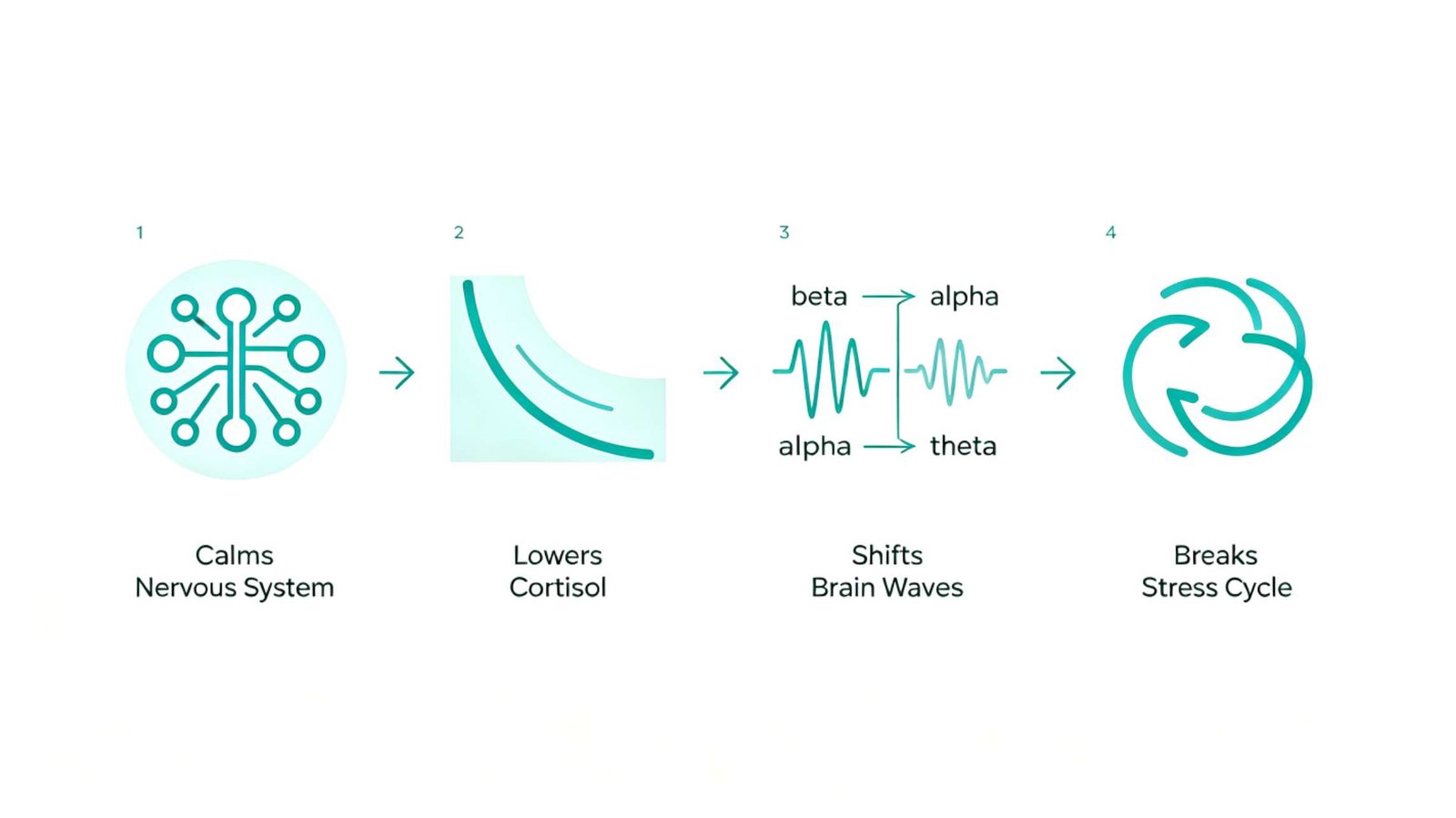
Sound healing for anxiety works through several powerful mechanisms:
- Calms the nervous system: Sound activates the parasympathetic nervous system, shifting your body from “fight or flight” to “rest and digest.”
- Lowers cortisol: Research shows that sound healing can significantly reduce cortisol levels — the stress hormone that fuels anxiety.
- Shifts brain waves: Sound helps slow brain waves from the fast beta state (associated with anxiety) to the calm alpha or theta state (associated with relaxation and meditation).
- Creates a sense of safety: The deep, grounding tones of singing bowls and gongs help your nervous system feel safe enough to let go of held tension.
- Breaks the stress cycle: Sound healing interrupts the cycle of anxious thoughts by giving your mind something to focus on — similar to how meditation works.
Many people notice physiological changes like slower breathing and reduced heart rate within 3-5 minutes of listening to healing frequencies. The relaxation response begins almost immediately as your brainwaves start to synchronize with the healing tones.
The Science Behind Sound Healing for Anxiety
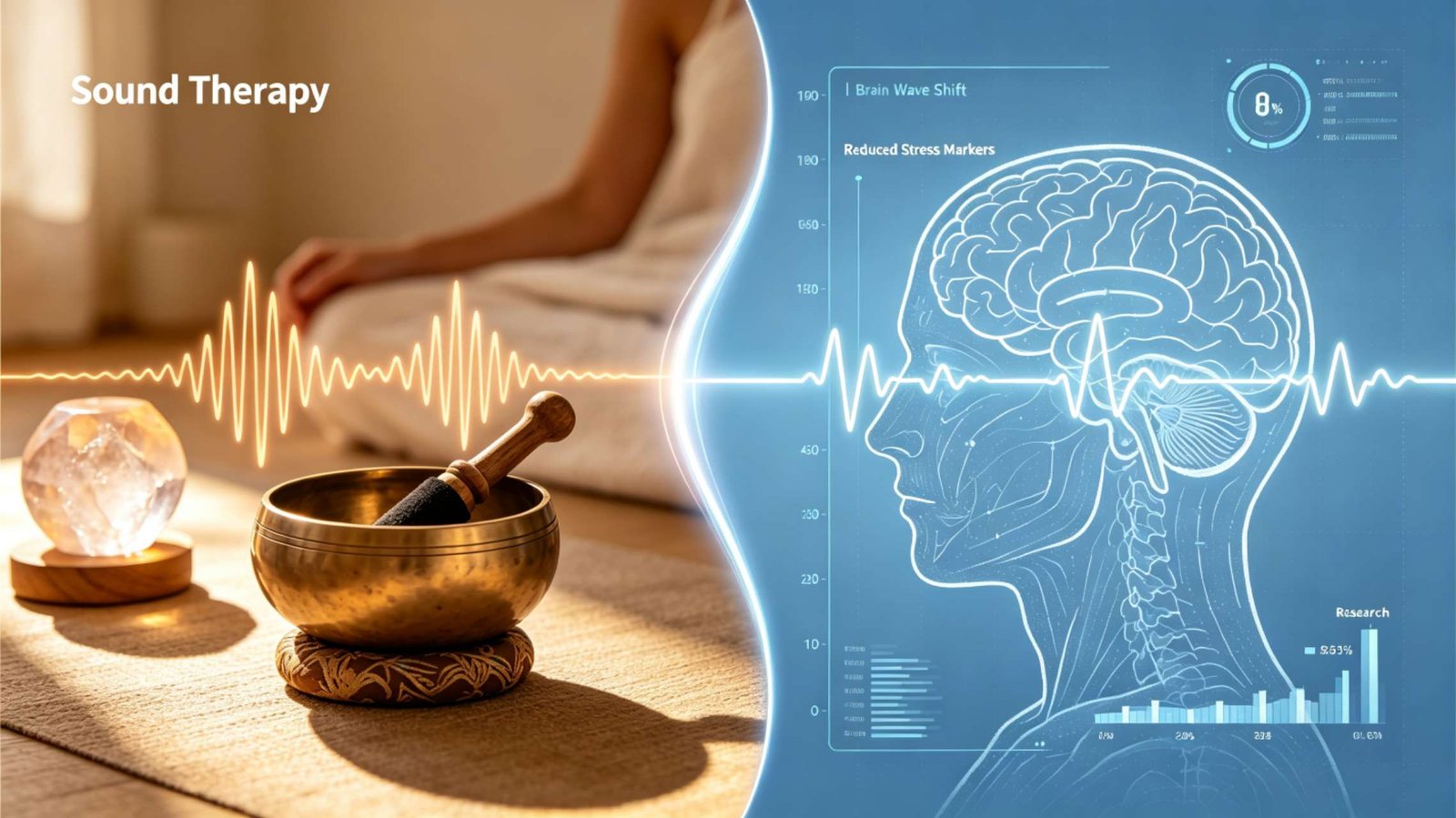
The science behind sound healing for anxiety is growing rapidly. Here are some key findings:
- A 2024 meta-analysis published in the Journal of Clinical Psychology found that sound healing and music therapy produced significant reductions in anxiety symptoms across multiple studies.
- Research on binaural beats has shown that specific frequencies can reduce anxiety, improve sleep quality, and regulate mood.
- Studies on 432 Hz music suggest that alternative tuning systems may promote relaxation and reduce anxiety compared with conventional 440 Hz tuning.
- Harvard Medical School has highlighted research demonstrating that listening to music can lower stress, reduce anxiety, and improve mood.
For more information on sound therapy research, visit the National Center for Complementary and Integrative Health (NCCIH) which provides evidence-based research on music and sound therapy.
Best Solfeggio Frequencies for Anxiety
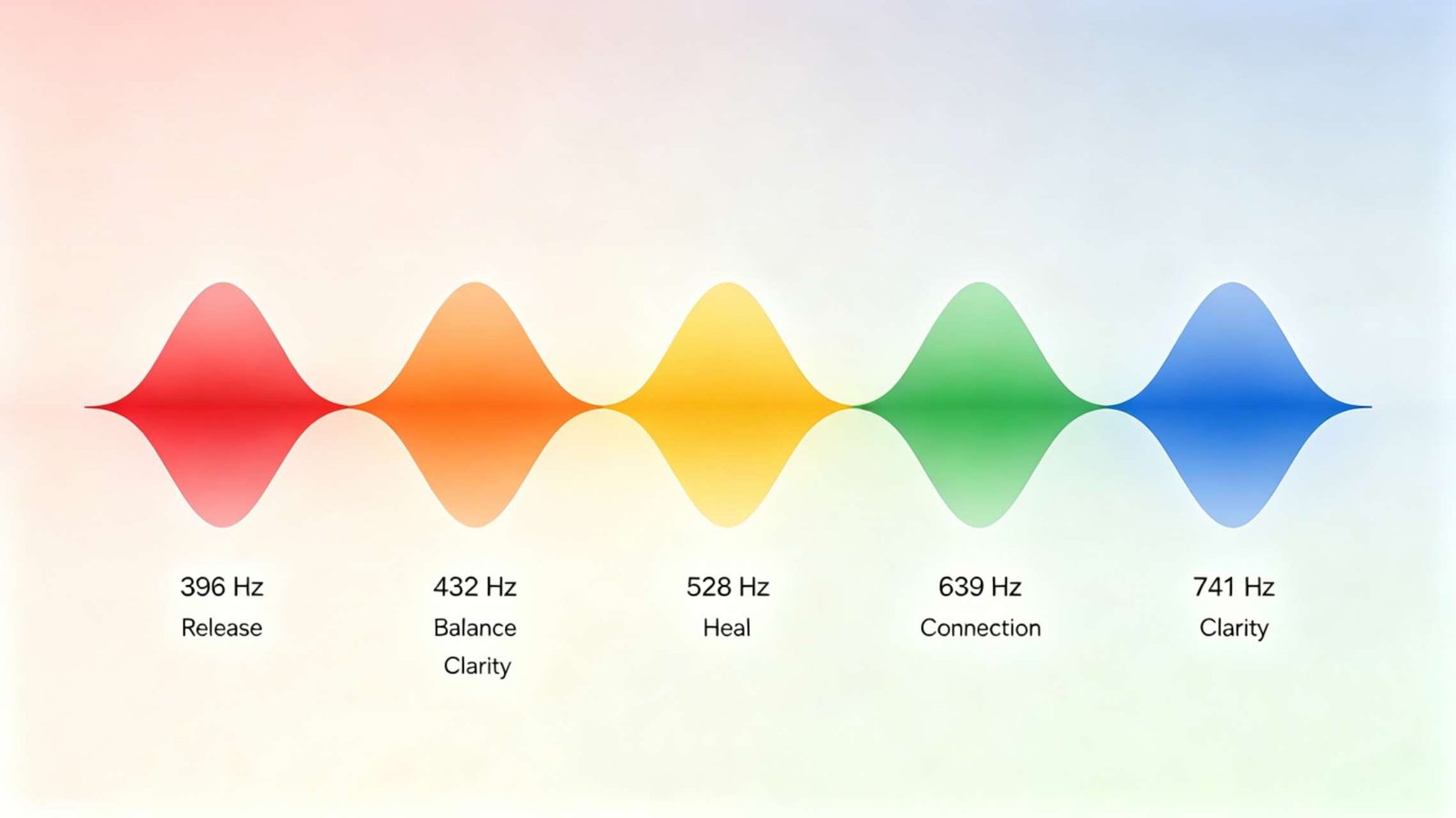
While all Solfeggio frequencies can support relaxation, certain frequencies are particularly effective for sound healing for anxiety:
| Frequency | How It Helps Anxiety | Best Used For |
|---|---|---|
| 396 Hz | Liberates fear, guilt, and limiting beliefs | Grounding, overcoming anxiety triggers |
| 432 Hz | Natural harmony, balances the nervous system | Daily relaxation, calming the mind |
| 528 Hz | Reduces stress, promotes transformation | Emotional healing, anxiety relief |
| 639 Hz | Calms emotional turmoil, supports connection | Social anxiety, relationship stress |
| 741 Hz | Clears mental clutter, reduces overthinking | Overactive mind, racing thoughts |
📖 Explore the complete Solfeggio frequencies guide →
Passive vs Active Sound Healing for Anxiety
Understanding the difference between passive and active sound healing can help you choose the right approach for your needs:
- Passive listening: Playing healing frequencies in the background while you work, relax, or sleep. This is the most accessible form of sound healing for anxiety. Simply press play and let the frequencies do their work.
- Active participation: Attending sound baths, chanting, or using instruments yourself to create vibrations you can feel throughout your body. This provides a more immersive experience.
Both approaches are effective. Passive listening is ideal for busy schedules, while active participation deepens the mind-body connection.
Sound Healing Techniques for Anxiety
Here are the most effective sound healing for anxiety techniques you can try:
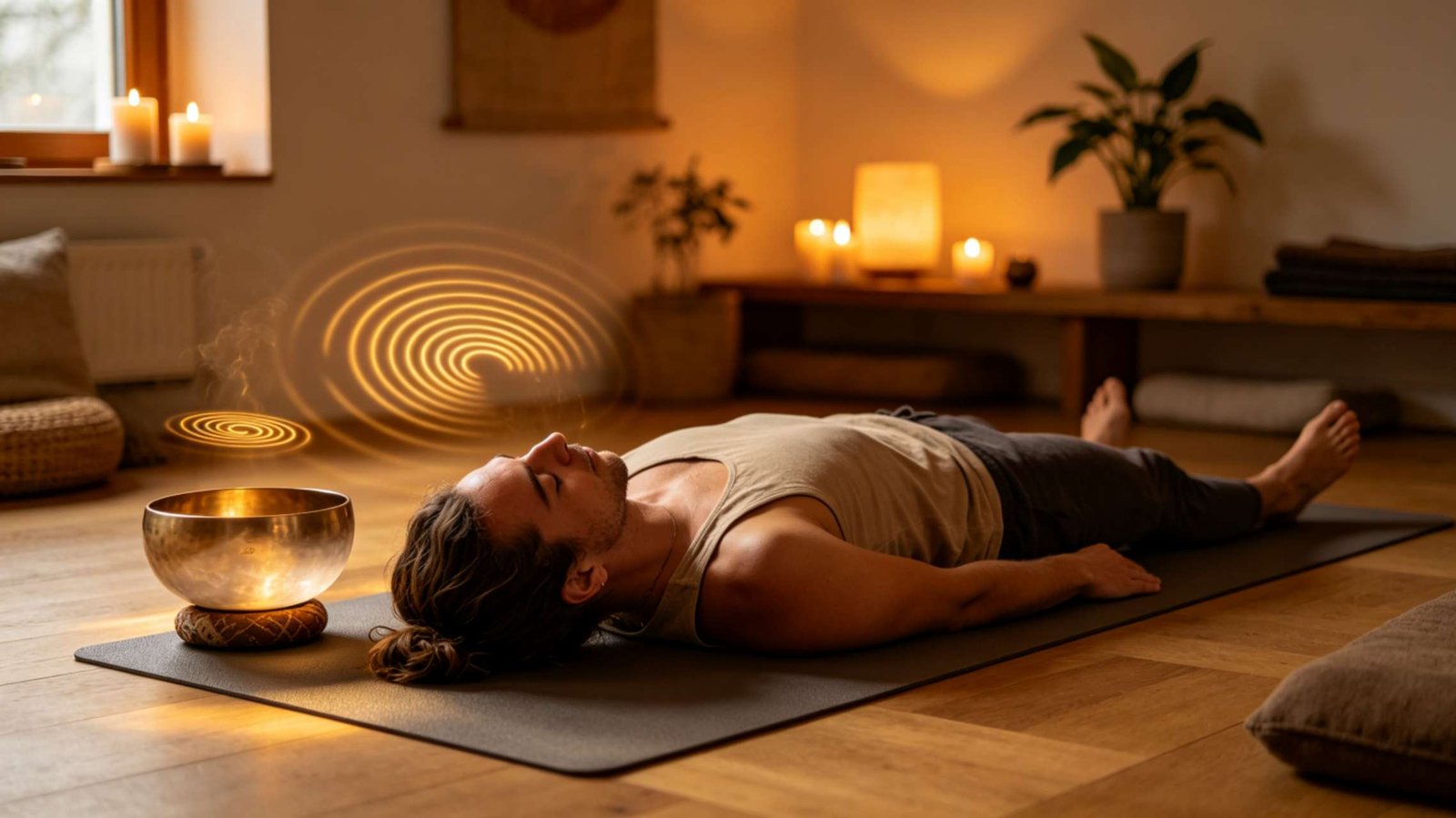
1. Singing Bowl Meditation
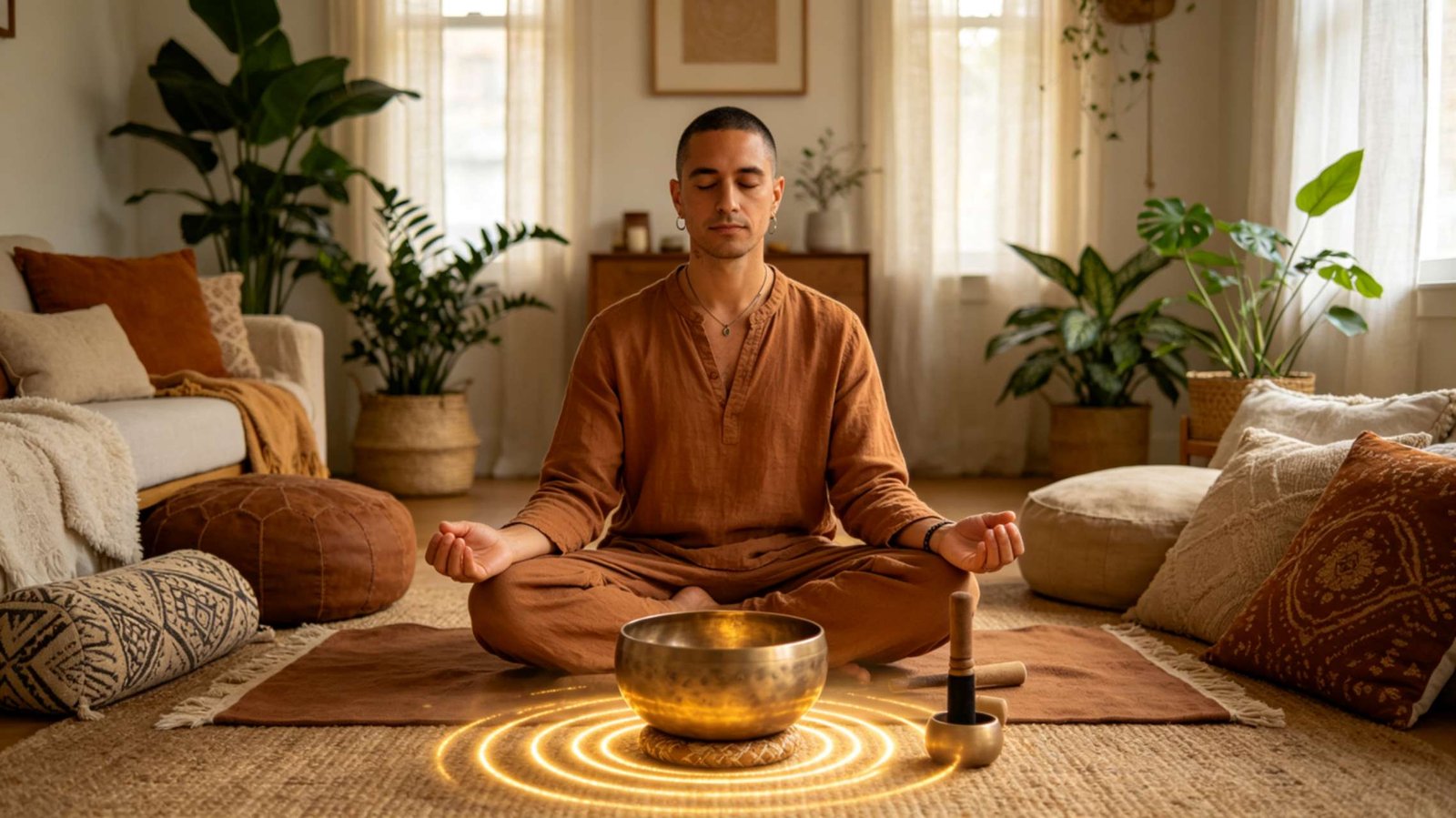
How to practice:
- Find a quiet, comfortable space.
- Sit or lie down and close your eyes.
- Place a singing bowl nearby or on your body.
- Strike or rub the bowl gently.
- Focus on the sound and vibration for 10-15 minutes.
- Notice how your body responds — warmth, tingling, or deep relaxation.
2. Tuning Forks for Anxiety
Tuning forks produce a single, pure frequency that can calm the nervous system instantly. Try 128 Hz or 256 Hz for grounding and relaxation.
- Strike the tuning fork on a rubber activator.
- Hold it near your ear or over a chakra point.
- Breathe deeply and focus on the vibration.
- Continue for 3-5 minutes.
3. Vocal Toning
Your voice is one of the most accessible sound healing for anxiety tools. Simply humming or toning can calm your nervous system.
- Sit comfortably and take a few deep breaths.
- Hum a low, steady note for 3-5 minutes.
- Feel the vibration in your chest and throat.
- Experiment with different pitches — notice what feels calming.
4. Sound Bath for Anxiety
A sound bath is a group session where you lie down while a practitioner plays singing bowls, gongs, and chimes. The sound “washes” over you, promoting deep relaxation and anxiety relief.
- Find a local sound bath or online recording.
- Lie down comfortably with headphones if using a recording.
- Close your eyes and allow the sound to wash over you.
- Stay for the full session (usually 45-60 minutes).
Sound Healing for Anxiety — Anywhere, Anytime
One of the greatest benefits of sound healing for anxiety is its accessibility. You don’t need a special room or expensive equipment — just a willingness to listen and receive.
At Home
- Use streaming platforms (YouTube, Spotify, Apple Music) for healing frequency playlists
- Invest in a small singing bowl or tuning fork for tactile vibration
- Combine with guided meditations for deeper relaxation
- Evening routines: 528 Hz or 432 Hz before sleep
- Create a calming environment: dim lights, comfortable seating, minimal distractions
At Work
- Use noise‑canceling headphones with anxiety‑reducing frequencies
- Take 5‑minute “sound breaks” during stressful periods
- Practice discreet breathwork while mentally focusing on a calming frequency
- Lunch breaks: 10‑minute session with 432 Hz or 528 Hz
- Even a short break can reset your nervous system and improve focus
On the Go
- Download a frequency playlist to your phone
- Listen during commute or while traveling
- Even 3‑5 minutes can reset your nervous system
- Use nature sounds combined with healing frequencies for grounding
- Perfect for busy schedules — healing on your terms
How to Start Sound Healing for Anxiety
Starting sound healing for anxiety is simple. Here’s a step-by-step guide:
- Start small: Try 5-10 minutes of humming or listening to a 528 Hz recording.
- Be consistent: Daily practice is more effective than occasional long sessions.
- Create a routine: Practice at the same time each day — morning or evening works best.
- Track your progress: Notice how you feel before and after each session.
- Experiment: Try different instruments and frequencies to find what works for you.
- Combine with other practices: Sound healing works well alongside meditation, breathwork, and yoga.
📖 Back to the complete sound healing guide →
Tips for Getting Started
- Start small: Begin with 5-10 minutes twice daily — morning and evening.
- Be consistent: A brief daily practice yields better results than occasional longer sessions. Consistency matters more than duration.
- Create a supportive environment: Dim lights, find a comfortable position, minimize distractions.
- Track your progress: Notice how you feel before and after each session. Even small shifts are progress.
- Experiment: Try different frequencies and instruments to find what works for you. There’s no “wrong” way to practice.
- Be patient: Like any wellness practice, sound healing takes time. Trust the process and stay curious.
Safety Considerations for Sound Healing for Anxiety
Sound healing is generally safe for most people. However, please note the following:
- Epilepsy: Consult your healthcare provider before attending a sound bath or using loud instruments. Certain frequencies may trigger seizures in sensitive individuals.
- Sound sensitivity: Start with lower volumes and shorter sessions if you have sound sensitivity or severe PTSD. Listen to your body and adjust accordingly.
- Pregnancy: Avoid very low frequencies and high‑volume sessions during pregnancy. Always check with your healthcare provider first.
- Mental health conditions: Sound healing is a complementary tool — not a replacement for professional mental health care. Continue working with your therapist or doctor.
- Volume awareness: Always listen at a comfortable volume to protect your hearing. If it feels too loud, it probably is.
Frequently Asked Questions About Sound Healing for Anxiety
Can sound healing cure anxiety?
Sound healing is not a cure for anxiety, but it is a powerful complementary tool that can significantly reduce anxiety symptoms. It should be used alongside, not as a replacement for, professional mental health care.
Can sound healing really calm anxiety instantly?
Yes. Most people notice physiological changes like slower breathing and reduced heart rate within 3-5 minutes of listening to healing frequencies. The relaxation response begins almost immediately as your brainwaves start to synchronize with the healing tones.
How quickly does sound healing work for anxiety?
Many people experience immediate relaxation during a session. For lasting change, regular practice over several weeks is recommended. Consistency matters more than duration.
What frequency is best for anxiety?
528 Hz and 396 Hz are the most commonly recommended frequencies for anxiety. 528 Hz promotes relaxation, while 396 Hz helps release fear and worry. 432 Hz is also excellent for daily calming.
How do I use sound healing at work without disturbing others?
Use noise‑canceling headphones with anxiety‑reducing frequencies, take short “sound breaks” in private spaces, or listen during lunch breaks and commutes. Even 5-minute sessions can significantly reduce workplace stress without affecting your productivity or disturbing colleagues.
Do I need special equipment for sound healing at home?
No. Your voice is a powerful tool. Humming and toning are free and effective. You can also use YouTube, Spotify, or wellness app recordings of singing bowls and Solfeggio frequencies. Instruments can enhance the experience but are not necessary.
Is sound healing safe for everyone?
Sound healing is generally safe for most people. However, if you have sound-sensitive conditions (like severe PTSD or epilepsy), are pregnant, or have other health concerns, consult your healthcare provider before starting.
References
- Journal of Clinical Psychology. The Efficacy of Sound Healing for Anxiety: A Meta-Analysis. 2024.
- Journal of Evidence-Based Integrative Medicine. Effect of Sound Bath on Stress and Mood. 2019.
- Frontiers in Psychology. Sound Healing and Brain Wave Entrainment. 2021.
- National Center for Complementary and Integrative Health (NCCIH). Music and Sound as Medicine. 2023.
- Harvard Health Publishing. Music and Health.
- Mayo Clinic. Complementary and Integrative Medicine: Music Therapy. 2023.
- Journal of Alternative and Complementary Medicine. Biofield Therapies and Sound Healing. 2022.
About the Author

This complete guide to sound healing for anxiety was written by our team of holistic wellness practitioners with over 10 years of experience in sound healing, energy therapy, and integrative wellness. We are committed to providing reliable, evidence-based information to help you on your healing journey.
Follow us for more sound healing guides and wellness tips.
Continue Your Sound Healing Journey
Disclaimer: Sound healing for anxiety is a complementary wellness practice and should not replace professional medical advice, diagnosis, or treatment. Always consult your healthcare provider for mental health concerns.
