
Jump to a Section:
What Are Solfeggio Frequencies? A Complete Guide
Solfeggio frequencies are a series of specific sound frequencies traditionally associated with healing, meditation, and spiritual wellbeing. They may be presented as pure tones, incorporated into musical compositions, or used as the tuning foundation of a piece of music. This complete guide to Solfeggio frequencies will help you understand what they are, how they work, and how to use them for your meditation, sleep, and wellness practice.
Inspired by the ancient six-tone Solfeggio scale and modern sound healing traditions, these frequencies are now widely used for meditation, relaxation, yoga, mindfulness, and sleep. Today, nine Solfeggio frequencies are commonly recognized, each traditionally associated with a different aspect of emotional, physical, or spiritual wellbeing.
While scientific research continues to explore how music and sound influence the brain and body, many of the specific benefits attributed to individual Solfeggio frequencies are based on longstanding spiritual traditions, historical interpretations, and the personal experiences of millions of listeners worldwide.
Key Takeaways:
- ✓ Solfeggio frequencies are a group of musical tones traditionally associated with healing and personal wellbeing.
- ✓ The original six-tone Solfeggio scale dates back to medieval sacred music and is closely linked with Gregorian chants.
- ✓ Modern sound healing commonly uses nine Solfeggio frequencies, ranging from 174 Hz to 963 Hz.
- ✓ Each frequency is traditionally associated with different emotional, physical, or spiritual qualities.
- ✓ Research supports the positive effects of music on relaxation, stress reduction, and mood, while the specific benefits of individual Solfeggio frequencies remain an area of ongoing study.
The History and Origins of Solfeggio Frequencies
The origins of the Solfeggio frequencies are a fascinating blend of music history, religious tradition, and modern interpretation. While today’s Solfeggio frequencies are widely associated with meditation and sound healing, their story begins more than a thousand years ago in the development of sacred music.
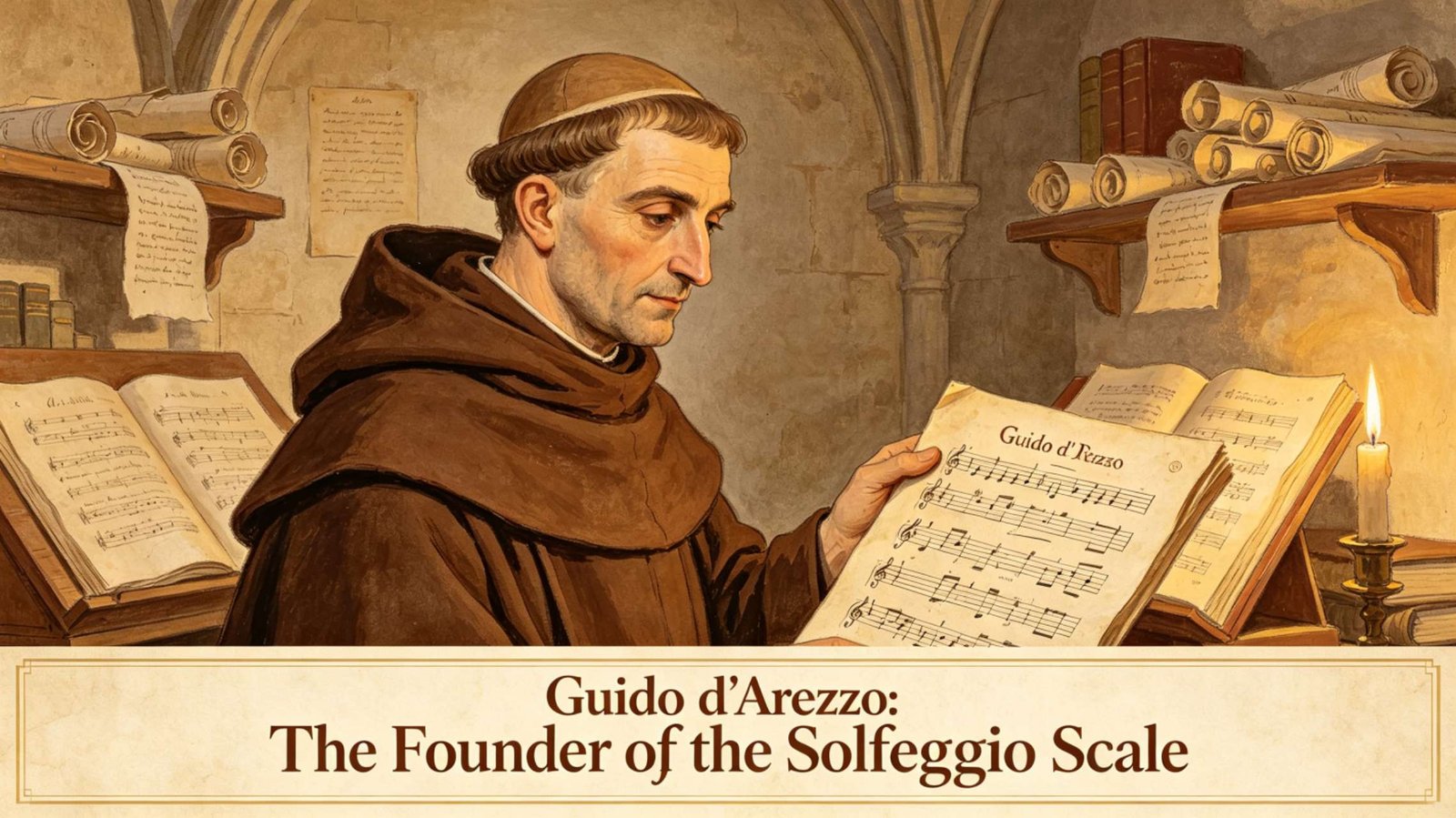
Based on the research of musicologist Willi Appel, it’s likely the scale was first introduced by Guido d’Arezzo, an Italian Benedictine monk and music theorist who lived during the 10th and 11th centuries. Guido revolutionized the way music was taught by introducing a system of syllables that allowed singers to learn melodies more accurately, laying the foundations for modern music notation.
His teaching method was based on the hymn Ut Queant Laxis, a Latin chant dedicated to Saint John the Baptist. Each line of the hymn begins with a different syllable:
- Ut — later became Do
- Re — remains Re
- Mi — remains Mi
- Fa — remains Fa
- Sol — later became So
- La — remains La
These syllables later evolved into the familiar Do-Re-Mi-Fa-Sol-La-Ti scale still used in music education today.
Although these syllables are historically well documented, the specific frequencies now known as 396 Hz, 417 Hz, 528 Hz, 639 Hz, 741 Hz, and 852 Hz are part of a much more recent interpretation of the ancient Solfeggio scale. The association between these exact frequencies and the medieval musical system became popular during the 20th century through the work of researchers such as Dr. Joseph Puleo and Dr. Leonard Horowitz.
Why Are Solfeggio Frequencies Associated with Healing?
For thousands of years, music has played an important role in human wellbeing. Long before the development of modern medicine, cultures around the world used rhythm, chanting, singing, and musical instruments during ceremonies, healing rituals, and spiritual practices.
From Ancient Greece and Egypt to India and Tibet, sound was often regarded as more than entertainment; it was seen as a way to influence the mind, body, and spirit.
Greek physicians used flutes, lyres, and zithers to heal their patients. They used vibration to aid in digestion, treat mental disturbance, and induce sleep. Aristotle wrote that flute music could arouse strong emotions and purify the soul. Ancient Egyptians described musical incantations for healing the sick.
The Solfeggio frequencies became associated with healing because they sit within this much broader tradition of using sound to promote relaxation, reflection, and emotional balance. Although the original medieval monks who sang Gregorian chants did not describe these tones as “healing frequencies” in the way they are understood today, their music was intended to create an atmosphere of peace, contemplation, and spiritual connection.
During the late 20th century, renewed interest in sacred music, meditation, and vibrational therapies led many researchers and sound practitioners to explore the potential effects of specific frequencies. This eventually gave rise to the modern interpretations of the Solfeggio frequencies, with each tone becoming traditionally associated with particular aspects of emotional, physical, or spiritual wellbeing.
The Decline of the Ancient Solfeggio Scale
By the late Middle Ages and into the Renaissance, Western music was undergoing one of the most significant transformations in its history. Composers were writing increasingly sophisticated music, new instruments were being developed, and the demands of performance were changing. As musical styles evolved, so too did the systems used to tune and organize music.
Over time, the six-note Solfeggio system that had helped generations of monks learn Gregorian chants gradually gave way to new approaches to tuning and musical notation. By the late sixteenth century, Western music was moving towards what would eventually become the twelve-tone equal temperament system — the tuning method still used by most modern instruments today.
Unlike Just Intonation, which is based on simple mathematical ratios between notes, equal temperament divides the octave into twelve equal intervals. This gave composers far greater freedom to change keys and create increasingly complex harmonies, helping shape the development of Western classical music over the following centuries.
“If you only knew the magnificence of the 3, 6 and 9, then you would have a key to the universe.” — Nikola Tesla
Tesla’s famous quotation has led many enthusiasts to speculate about possible connections between mathematics, vibration and the Solfeggio frequencies. Interestingly, if we apply the Pythagorean method of number reduction to the Solfeggio frequencies, we find that each of them adds up to 3, 6, or 9.
How Were the Solfeggio Frequencies Rediscovered?

For several centuries, the Solfeggio frequencies attracted little public attention. That changed during the 1970s, when Dr. Joseph Puleo claimed to have uncovered a remarkable numerical pattern while studying the Book of Numbers in the Old Testament.
To understand Puleo’s work, it helps to understand the Pythagorean method of number reduction, a mathematical technique in which the digits of a number are repeatedly added together until only a single digit remains.
For example: 18 → 1 + 8 = 9 and 184 → 1 + 8 + 4 = 13 → 1 + 3 = 4
Puleo applied this method to Chapter 7 of the Book of Numbers. According to his research, a repeating numerical pattern began to emerge. He claimed that every sixth verse revealed sequences corresponding to frequencies such as 396 Hz and 417 Hz, which he believed matched the ancient Solfeggio scale. Continuing this process, he identified additional frequencies that eventually formed the basis of the modern Solfeggio system.
Puleo later published his findings in collaboration with Dr. Leonard Horowitz in the book Healing Codes for the Biological Apocalypse. Their work introduced the Solfeggio frequencies to a much wider audience and sparked renewed interest in sound healing, sacred geometry, and vibrational medicine.
The 9 Solfeggio Frequencies Chart
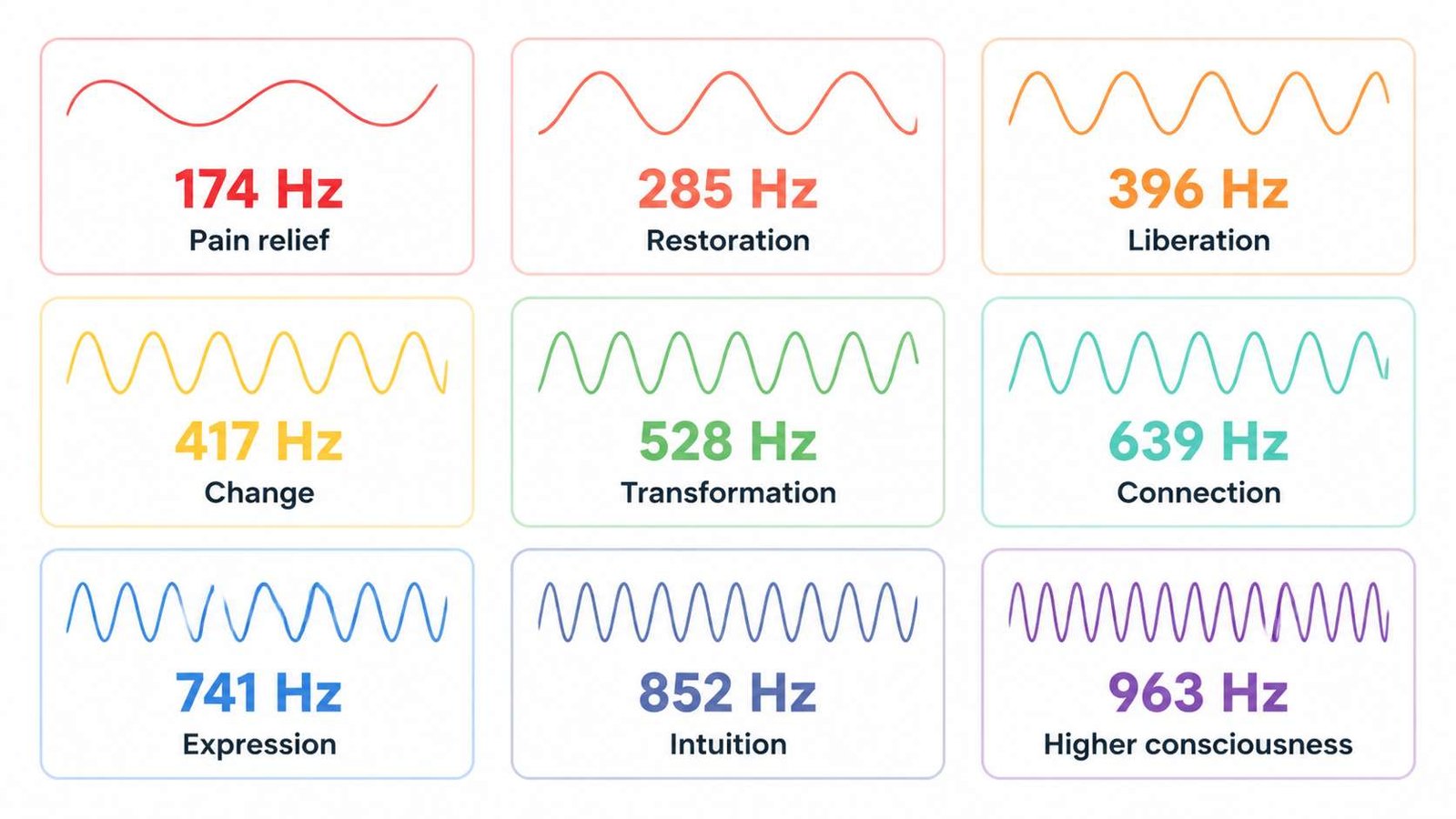
The Solfeggio frequencies are traditionally divided into two groups: the original six frequencies, which are most closely associated with the ancient Solfeggio scale and Gregorian chant, and three additional frequencies that were introduced into modern sound healing during the late 20th century.
Each frequency has traditionally been associated with a particular aspect of emotional, physical, or spiritual wellbeing. While these associations are widely recognized within sound healing communities, they should be understood as traditional interpretations rather than scientifically established medical effects.
| Frequency | Traditional Association | Associated Chakra |
|---|---|---|
| 174 Hz | Security, comfort and pain relief | Root |
| 285 Hz | Healing, tissue restoration and renewal | Sacral |
| 396 Hz | Releasing fear and guilt | Root |
| 417 Hz | Change, transformation and new beginnings | Sacral |
| 528 Hz | Transformation, love and positive change | Solar Plexus |
| 639 Hz | Relationships, harmony and communication | Heart |
| 741 Hz | Expression, clarity and problem solving | Throat |
| 852 Hz | Intuition and spiritual awareness | Third Eye |
| 963 Hz | Higher consciousness and unity | Crown |
📖 Explore the complete guide to 432Hz frequency benefits →
The Original Six Solfeggio Frequencies
The six original Solfeggio frequencies form the foundation of the ancient Solfeggio scale and remain the most widely recognized tones within the system. Traditionally associated with the syllables Ut–Re–Mi–Fa–Sol–La, these frequencies are closely linked with Gregorian chant.
396 Hz — Liberating Fear and Guilt
396 Hz is traditionally associated with releasing fear, guilt, and limiting beliefs. Within modern sound healing, it is often linked with the Root Chakra and is considered a grounding frequency that encourages emotional stability, courage, and a greater sense of security.
417 Hz — Supporting Change and New Beginnings
417 Hz is traditionally associated with transformation, adaptability, and embracing change. It is often used during periods of transition, helping listeners let go of old patterns and approach new experiences with a more open perspective.
528 Hz — Transformation and Positive Energy
Perhaps the best-known of all the Solfeggio frequencies, 528 Hz is often referred to as the “Love Frequency.” Within modern sound healing traditions, it has become associated with transformation, harmony, and positive emotional wellbeing.
639 Hz — Relationships and Connection
639 Hz is traditionally associated with communication, compassion, and harmonious relationships. It is commonly linked with the Heart Chakra and is often chosen by those seeking to strengthen personal relationships, encourage forgiveness, or cultivate greater empathy.
741 Hz — Expression and Mental Clarity
741 Hz is traditionally linked with clear communication, creativity, and self-expression. Within sound healing practices, it is often associated with removing emotional barriers that may prevent honest communication or personal growth.
852 Hz — Intuition and Spiritual Awareness
852 Hz completes the original six-frequency system and is traditionally associated with intuition, higher awareness, and spiritual insight. It is commonly connected with the Third Eye Chakra and is often used during meditation practices focused on mindfulness, self-reflection, and inner wisdom.
The Three Modern Solfeggio Frequencies
Although the original Solfeggio scale consisted of six frequencies, three additional tones were introduced during the modern revival of sound healing in the late twentieth century. These frequencies — 174 Hz, 285 Hz, and 963 Hz — were incorporated into the system through the work of Dr. Joseph Puleo and Dr. Leonard Horowitz.
174 Hz — Security, Comfort and Pain Relief
174 Hz is the lowest of the modern Solfeggio frequencies and is traditionally associated with feelings of safety, grounding, and physical comfort. Within sound healing practices, it is often described as a soothing frequency that promotes relaxation and helps reduce the perception of physical tension.
285 Hz — Healing and Restoration
285 Hz is traditionally linked with healing, renewal, and the body’s natural restorative processes. Sound healing practitioners often associate this frequency with tissue regeneration, cellular wellbeing, and supporting the body’s ability to recover from physical or emotional strain.
963 Hz — Higher Consciousness and Unity
963 Hz is commonly regarded as the highest of the Solfeggio frequencies and is traditionally associated with spiritual awareness, inner peace, and a deeper connection with universal consciousness. Often linked with the Crown Chakra, it is frequently used during meditation practices that focus on mindfulness, transcendence, and contemplation.
Solfeggio Frequencies and the 7 Chakras
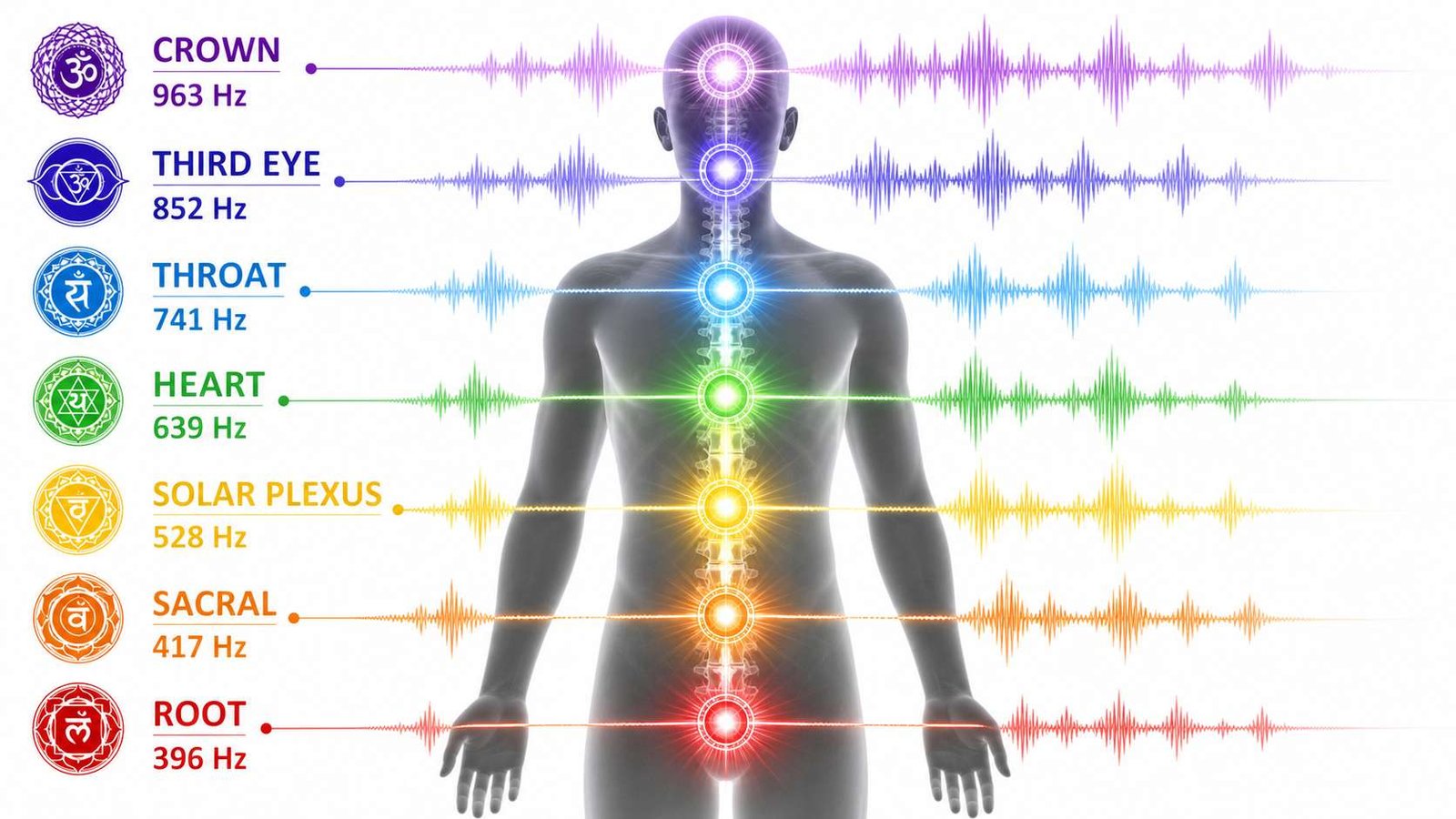
One of the most common ways the modern Solfeggio frequencies are used is in conjunction with the seven chakras, the energy centers described in traditional Hindu and yogic philosophy. Many meditation teachers, sound therapists, and holistic practitioners believe that listening to particular frequencies may help support balance, focus, and awareness within specific chakras.
It is important to understand, however, that these associations are a modern interpretation rather than part of the original medieval Solfeggio tradition. The ancient Solfeggio scale predates the modern concept of frequency-specific sound healing, while the chakra system originates from spiritual traditions that developed independently in India thousands of years ago.
During the late twentieth century, as interest in meditation, yoga, and vibrational healing grew, many sound practitioners began pairing individual Solfeggio frequencies with the seven major chakras. Today, this mapping has become one of the most widely adopted frameworks within the modern Solfeggio community.
📖 Explore the complete guide to 7 chakras →
How to Choose the Right Solfeggio Frequency
With nine different frequencies, each associated with its own traditional meaning, choosing the right one can feel overwhelming. The good news is that there is no “correct” frequency to listen to. Many people simply choose the tone that best matches their current intention or the area of their life they would like to focus on.
| If you want to… | Traditional Frequency | Traditionally Associated With |
|---|---|---|
| Feel more grounded and overcome fear | 396 Hz | Grounding, releasing fear and guilt |
| Embrace change or new beginnings | 417 Hz | Transformation and renewal |
| Meditate or cultivate inner peace | 528 Hz | Harmony, balance and positive transformation |
| Strengthen relationships and compassion | 639 Hz | Connection and communication |
| Express yourself more clearly | 741 Hz | Expression and clarity |
| Develop intuition and mindfulness | 852 Hz | Intuition and spiritual awareness |
| Relax and unwind | 174 Hz | Comfort and relaxation |
| Focus on healing and renewal | 285 Hz | Restoration and wellbeing |
| Deepen spiritual practice | 963 Hz | Higher consciousness and unity |
The best approach is often to explore different frequencies with an open mind and discover which ones resonate most with your own meditation or relaxation practice.
Do Solfeggio Frequencies Really Work? What Science Says
Whether Solfeggio frequencies “work” depends on what is meant by the question. Many people report feeling calmer, more focused, or more relaxed while listening to them, but the scientific evidence for the specific effects of individual Solfeggio frequencies is still developing.
To understand what is currently known, it’s helpful to distinguish between research on Solfeggio frequencies themselves and the much broader body of evidence surrounding music therapy and frequency-based audio.
What Does the Research Say?
One of the most common questions people ask is whether Solfeggio frequencies have been scientifically proven. The short answer is that research specifically investigating the Solfeggio frequencies remains limited. Although a small number of studies have explored individual frequencies, there is currently no large body of clinical research confirming the traditional healing properties associated with each of the nine Solfeggio frequencies.
However, this does not mean that the broader field of music and sound therapy lacks scientific support. Over the past several decades, researchers have produced a substantial body of evidence showing that music can positively influence both mental and physical wellbeing. Institutions including Harvard Medical School have highlighted research demonstrating that listening to music can reduce stress, lower anxiety, improve mood, support recovery, and even influence physiological responses such as heart rate and blood pressure.
For more information on sound therapy research, visit the National Center for Complementary and Integrative Health (NCCIH) which provides evidence-based research on music and sound therapy.
Current research suggests that listening to music and frequency-based audio may help to:
- Reduce stress and anxiety
- Promote relaxation and emotional wellbeing
- Lower heart rate and blood pressure during periods of rest
- Support meditation and mindfulness practices
- Improve sleep quality in some individuals
- Assist with pain management in certain clinical settings
French physician Dr. Alfred Tomatis was one of the pioneers in exploring the relationship between sound and human wellbeing. During the mid-20th century, he developed the Tomatis Method (Audio-Psycho-Phonology), using carefully selected music to support hearing, language development, learning, and emotional wellbeing. Among the recordings used in his work were Gregorian chants, providing an interesting historical connection to one of the traditions from which the modern Solfeggio movement draws inspiration.
How to Listen to Solfeggio Frequencies
One of the advantages of Solfeggio frequencies is that they are easy to incorporate into everyday life. Whether you’re meditating, practicing yoga, working, or simply relaxing at home, there is no single “correct” way to listen.
Solfeggio frequency music does not require headphones. It can be enjoyed through headphones, speakers, or high-quality sound systems. However, many listeners prefer headphones during meditation because they create a more immersive and distraction-free experience.
If you’re just getting started, try listening for 15 to 30 minutes in a quiet environment where you can fully relax.
Many people enjoy listening:
- During meditation or mindfulness practice
- While practicing yoga or breathwork
- Before going to sleep to help unwind
- During periods of study or creative work
- As calming background music while reading or relaxing
Frequently Asked Questions About Solfeggio Frequencies
What are Solfeggio frequencies?
Solfeggio frequencies are a series of specific sound frequencies traditionally associated with healing, meditation, and spiritual wellbeing. Inspired by the ancient Solfeggio scale, they are commonly used in meditation music as pure tones, harmonic foundations, or tuning references. The original system consisted of six frequencies, while modern sound healing typically uses a nine-frequency scale.
Which Solfeggio frequency should beginners start with?
There is no universal starting point. Many beginners choose 528 Hz because of its association with balance and positive transformation, while others select a frequency that aligns with their personal goals, such as 396 Hz for grounding or 639 Hz for relationships.
Are Solfeggio frequencies scientifically proven?
Research has shown that music can reduce stress, improve mood, and promote relaxation. However, many of the specific meanings and healing properties associated with individual Solfeggio frequencies are based on traditional sound healing practices rather than conclusive clinical evidence.
Do I need headphones?
No. Solfeggio frequencies can be enjoyed through speakers or headphones. Headphones may provide a more immersive listening experience but are not required.
Can I listen to Solfeggio frequencies while sleeping?
Yes. Many people listen to Solfeggio music before bed or throughout the night as part of a relaxing sleep routine. Gentle ambient recordings are particularly well suited to overnight listening.
Can I listen to more than one Solfeggio frequency?
Absolutely. Some people focus on a single frequency, while others enjoy listening to different frequencies depending on their mood, meditation practice, or personal intentions.
What is the difference between Solfeggio frequencies and 432 Hz?
Solfeggio frequencies and 432 Hz are often discussed together because both can be used in meditation music and heard as pure tones. The difference is that Solfeggio frequencies are a collection of specific sound frequencies inspired by the ancient Solfeggio scale and modern sound healing traditions, whereas 432 Hz is an alternative musical tuning standard. While music can be tuned to 432 Hz, and a pure 432 Hz tone can also be produced, it is not one of the Solfeggio frequencies.
What is the difference between Solfeggio frequencies and binaural beats?
Binaural beats work very differently from Solfeggio frequencies. Rather than relying on a single musical tone, binaural beats present two slightly different frequencies, one to each ear through headphones. The brain perceives the difference as a third rhythmic pulse known as the binaural beat. Because binaural beats rely on this auditory illusion, headphones are required for them to be effective.
Why are there nine Solfeggio frequencies?
Historically, the Solfeggio scale consisted of six frequencies. During the modern revival of sound healing, 174 Hz, 285 Hz, and 963 Hz were added to create the nine-frequency system commonly used today.
Are Solfeggio frequencies linked to religion?
The original Solfeggio syllables were used in medieval Christian sacred music and Gregorian chant. Today, however, Solfeggio frequencies are used by people from many different spiritual backgrounds, as well as by those who simply enjoy them for relaxation and meditation.
Are Solfeggio frequencies safe?
For most people, yes. Solfeggio frequency music is generally considered safe to listen to at a comfortable volume. As with any audio, avoid excessively loud listening levels to protect your hearing.
References
- Appel, W. The Notation of Polyphonic Music 900–1600. JSTOR.
- Chanda, M. L., & Levitin, D. J. The Neurochemistry of Music. National Center for Biotechnology Information (NCBI).
- Doty, D. B. The Just Intonation Primer.
- National Center for Complementary and Integrative Health (NCCIH). Music and Sound as Medicine. 2023.
- Harvard Health Publishing. Music and Health.
- Journal of Evidence-Based Integrative Medicine. Sound Healing and Stress Reduction. 2019.
- Frontiers in Psychology. Sound Healing and Brain Wave Entrainment. 2021.
- International Journal of Yoga. Nada Yoga: The Yoga of Sound. 2020.
- Mayo Clinic. Complementary and Integrative Medicine: Music Therapy. 2023.
- Journal of Alternative and Complementary Medicine. Biofield Therapies and Sound Healing. 2022.
- Puleo, J. & Horowitz, L. Healing Codes for the Biological Apocalypse.
About the Author
This complete guide to Solfeggio frequencies was written by our team of holistic wellness practitioners with over 10 years of experience in sound healing, energy therapy, and integrative wellness. We are committed to providing reliable, evidence-based information to help you on your healing journey.
Follow us for more Solfeggio frequency guides and wellness tips.
Sound Healing Certificate Program

Ready to take your sound healing practice to the next level? The Sound Healing Master Class offers comprehensive training in vibroacoustic therapy, inner music theory, and resonant connections. With 31 classes led by live instructors or available by video, this state-approved certificate program is designed for practitioners who want to deepen their understanding of how sound affects the human body.
📖 Explore the Sound Healing Master Class →
Continue Your Sound Healing Journey
Disclaimer: Solfeggio frequencies are a complementary wellness tool and should not replace professional medical advice, diagnosis, or treatment. Always consult your healthcare provider for medical concerns.
