
When anxiety spikes, it is natural to want something that helps right now, and the internet is full of energy techniques promising instant calm without medication. Some of these practices genuinely turn down the body’s alarm response; others are oversold, and a few can delay help that genuinely matters. This guide looks honestly at five popular approaches, what they can realistically do in a difficult moment, and how to tell when anxiety needs professional care rather than another breathing exercise.
What Anxiety Does to Your Body
Anxiety triggers the sympathetic nervous system, the fight-or-flight response that releases adrenaline and cortisol. The heart beats faster, breathing becomes quick and shallow, muscles tighten, and attention narrows onto threat. These sensations are uncomfortable but are part of a normal alarm system. Anxiety becomes a disorder when the response is intense, persistent, out of proportion to the situation, or starts to interfere with work, relationships, sleep, or everyday life.
This matters because the techniques that genuinely help in a hard moment work through known physiology rather than a mysterious force. Slow, extended exhales stimulate the vagus nerve and parasympathetic rest-and-digest system; relaxing muscles and shifting attention dial down arousal. Framing these effects as blocked energy being cleared is not necessary for them to work, and it can obscure both the real mechanism and the limits of self-help. Our introduction explains what energy healing is and where its concepts come from.
What Energy Healing Gets Right, and What It Overstates
Ideas such as qi, prana, the aura, and the chakras come from traditional and spiritual frameworks rather than measured anatomy. No test has identified blocked energy centers that cause anxiety. At the same time, many practices wrapped in that language involve ingredients with real calming effects: slow breathing, gentle touch, focused attention, ritual, a caring practitioner, and quiet time. The relaxation and expectation involved can lower heart rate and blood pressure, but those changes demonstrate a relaxation response, not an energy field being repaired, and they are not evidence of an effect “beyond placebo.” A placebo response is not imaginary; it is a genuine shift in how safe and calm the body feels.
Claims go too far when they state that quantum physics allows healing energy to travel through space and time for distance sessions, or that specific sound frequencies reliably retune brain waves from beta to theta. These are not established mechanisms, and they should not be used to market treatment for a mental health condition.
Five Calming Approaches, Ranked by Evidence
The practices below are commonly grouped as energy healing, but they are not equally supported. The strongest, most immediate help comes from simple regulation skills rather than hands-off energy work.
1. Slow breathing: the most useful in the moment
Deliberately slowing the breath and lengthening the exhale is the quickest self-help tool with a clear physiological basis. Options include box breathing (inhale 4, hold 4, exhale 4, hold 4) and coherent breathing at roughly five to six breaths per minute. The 4-7-8 method is popular, but breath holds do not suit everyone; if you feel light-headed, tingly, or more panicky, return to normal, comfortable breathing. Breathing can take the edge off and shorten recovery, but it does not guarantee that anxiety vanishes instantly, and it works better with practice before a crisis. The U.S. National Center for Complementary and Integrative Health summarizes relaxation techniques and their evidence.
2. Grounding and mindfulness
Grounding pulls attention back to the present: naming five things you can see, four you can touch, three you can hear, two you can smell, and one you can taste. A body-scan meditation and mindfulness-based stress reduction apply the same principle more formally. Mindfulness has moderate-quality evidence for reducing anxiety and its interference over time, although it is a skill that improves with repetition rather than a one-time fix; read the NCCIH overview of meditation and mindfulness.
3. Acupressure
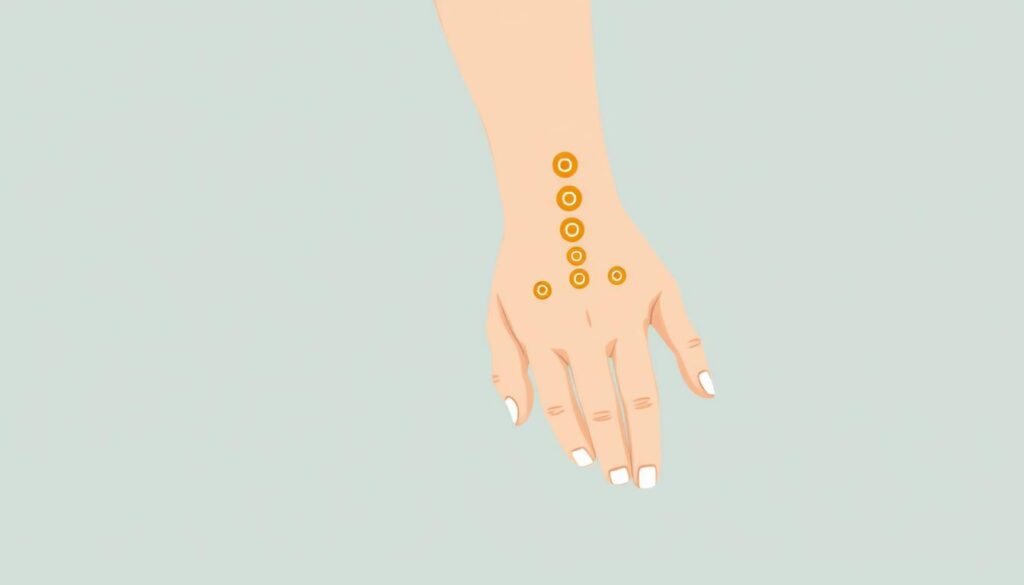
Acupressure applies pressure to points such as PC6 on the inner wrist, a point with reasonably good evidence for nausea but only small, short-term studies for anxiety. Pressing a point while breathing slowly can be a discreet, harmless way to cue relaxation; the honest explanation combines touch, focused attention, and breathing rather than the release of blocked qi. Stop if it causes pain, and do not use it to replace treatment.
4. Reiki and hands-on relaxation
Reiki places hands lightly on or near the body, and many people find sessions deeply calming. The research is small and low quality, with effects that are generally hard to distinguish from touch, quiet, attention, and expectation, and distance Reiki lacks a credible mechanism. It is reasonable as a relaxing, low-risk experience, but not as a treatment for an anxiety disorder. Our Reiki healing guide explains the practice and its limits, and NCCIH covers the current state of Reiki research.

5. Sound and chakra practices
Singing bowls, recorded music, and chanting can be soothing because of rhythm, sound masking, slowed breathing, and expectation, and our sound healing guide covers what is realistic. Claims that particular frequencies rebalance the brain or chakras are not established. Chakra colors and visualizations can still be used as a focus for meditation, much like any calming image, but the seven chakras are a traditional map rather than a diagnosed system, and an “imbalanced chakra” is not a medical cause of anxiety.
“Instant” Relief vs. Getting Through the Moment
It helps to set honest expectations. Breathing, grounding, and relaxation can reduce physical arousal, help you ride the peak of anxiety, and shorten recovery, sometimes within minutes. They do not reliably switch anxiety off on demand, and a technique that does not work once is not proof that you have failed; these are skills that strengthen with regular practice. For an anxiety disorder, the strongest evidence belongs to cognitive behavioral therapy and, for many people, medication, alongside regular exercise, good sleep, and limiting caffeine and alcohol. Choosing medication when it is recommended is not a weakness, and self-help techniques are an addition to that care rather than a test of willpower.
When Anxiety Needs Professional Help
Seek urgent medical care for chest pressure or pain, shortness of breath, fainting, or a racing or irregular heartbeat that is new, severe, or different from usual, because thyroid, heart, and other conditions can mimic panic. Arrange prompt professional help if panic attacks recur, if you avoid places or activities, if anxiety lasts for weeks, or if it disrupts work, relationships, or sleep. Cognitive behavioral therapy is a first-line, well-supported treatment, and clinicians may also discuss medication; the U.S. National Institute of Mental Health outlines anxiety disorders and their treatment.
Medication safety matters. Do not abruptly stop antidepressants such as SSRIs, which can cause withdrawal symptoms, or change benzodiazepine dosing yourself because of dependence and withdrawal risks; any change should be planned with the prescriber. Tell your clinician about complementary practices you use. Be cautious with any practitioner who promises a cure, tells you to stop medication, or sells repeated expensive sessions based on an energy diagnosis only they can detect. If you are in crisis in the U.S., the 988 Suicide & Crisis Lifeline offers free, confidential call, text, and chat support.
A Simple, Evidence-Informed Routine
For day-to-day anxiety, a short routine beats searching for an instant cure: a few minutes of slow breathing or mindfulness once or twice daily, regular movement or yoga, consistent sleep, moderating caffeine and alcohol, time outdoors, and journaling. Enjoy Reiki, sound, or chakra practices if they give you ritual, meaning, or calm, while keeping diagnosis and treatment with qualified professionals. You can also browse tools for energy healing and see how similar mind-body approaches are used in our guide to energy healing and chronic pain.
A Guided Option When Practicing Alone Is Hard
The techniques above are free, and the single biggest predictor of benefit is simply doing them regularly. Most people find that far easier with a guided session than by relying on willpower; when a calm voice and slow pacing lead the way, the body tends to follow toward rest-and-digest on its own. If you want something you can press play on each evening, especially to wind down before bed, a well-produced relaxation audio program makes the habit simple and private.
One option worth knowing about is The Healing Wave, a library of guided sound and relaxation sessions designed to help you unwind and settle toward sleep. It is a convenient way to turn slow breathing and soft sound into a consistent wind-down ritual you can begin tonight, and many listeners value having a familiar, calming track to return to on difficult days. It pairs naturally with the practices in our sound healing guide.
Keep the expectation honest: this is a relaxation and sleep support that helps you actually do the calming practices, not a treatment for an anxiety disorder and not a replacement for therapy, medication, or a clinician’s plan. If a guided program helps you relax more often and sleep more steadily, that is a genuine, worthwhile benefit; the clinical care still belongs with the professionals.
Affiliate disclosure: we may earn a small commission if you purchase through this link, at no extra cost to you. We only suggest products we believe can genuinely support a regular relaxation practice.
If you would rather start at no cost, the breathing and grounding steps above, a few minutes of the NCCIH relaxation techniques, or the free resources in our energy healing collections are an excellent place to begin.
Frequently Asked Questions
Can energy healing stop a panic attack instantly?
No technique reliably stops a panic attack on demand. Slow breathing and grounding can reduce arousal and help you ride out the peak, and they improve with practice. If chest pain, breathlessness, or fainting occurs, especially for the first time, seek urgent medical care rather than assuming it is panic.
Which calming technique has the best evidence?
For immediate self-regulation, slow breathing and grounding are the most accessible and are supported by known physiology. For an ongoing anxiety disorder, cognitive behavioral therapy has the strongest evidence, with mindfulness, exercise, and sometimes medication as common parts of a treatment plan.
Can I use these methods instead of anxiety medication?
Do not replace or stop prescribed medication on your own. Self-help and energy practices can safely complement professional treatment, but stopping antidepressants abruptly or changing benzodiazepines can cause withdrawal and other risks. Discuss any changes with your prescriber.
How do I tell a panic attack from a heart problem?
Symptoms overlap, including a racing heart, chest discomfort, and shortness of breath, so they cannot be reliably distinguished at home. New chest pain or pressure, pain spreading to the arm or jaw, fainting, sweating, or an episode that feels different from before warrants urgent medical assessment.
Do Reiki or distance healing sessions work for anxiety?
Many people find Reiki relaxing, and in-person sessions are generally low risk, but studies are small and do not show a reliable benefit beyond touch, attention, and expectation. Distance healing lacks a credible mechanism and should not replace treatment.
Can guided relaxation audio help with anxiety?
Many people find guided breathing, meditation, and relaxation audio helpful for building a regular practice and for winding down before sleep, because following a calm voice makes the techniques easier to keep doing. Lowering arousal is genuinely useful, but these programs support rather than treat an anxiety disorder and do not replace therapy or prescribed care.
When should I get urgent help for anxiety?
Get urgent help for thoughts of self-harm or suicide, feeling unable to stay safe, severe chest or breathing symptoms, or fainting. In the U.S., call or text 988 or use the 988 Lifeline; elsewhere, contact local emergency services or an emergency department.
Final Thoughts
The honest version of “calming anxiety without medication” is not that energy work replaces treatment, but that simple regulation skills can genuinely soften a hard moment and sit sensibly alongside professional care. There is real empowerment in this: learning to slow your breath and settle your nervous system is a genuine, learnable skill that helps many people feel more capable when anxiety rises, and choosing to practice it is a positive, practical step you can take for yourself today. Lean on slow breathing and grounding first, treat Reiki, sound, and chakra practices as calming rituals rather than cures, use guided audio if it helps you stay consistent, keep medication decisions with your clinician, and seek urgent help when the body or mind shows warning signs. That combination is both gentler and safer than choosing between energy and medicine.
