
For almost ten years I started my mornings to the sound of pill bottles rattling in the cabinet. A back injury that never healed properly left me with chronic aching and stiffness, and painkillers were how I got through work meetings, short dog walks, and even a movie without wincing. The medication did its job, but the brain fog and fatigue wore me down, and I worried about long-term use.
Like many people in that cycle, I went looking for something gentler to add to my routine, not another promise to replace my treatment. That search led me to low-frequency sound therapy. I tried it for 30 days and kept a daily log. This article shares what happened, what the research actually supports, and how to explore it safely. To be clear up front: I did not stop taking my medication, and nothing here suggests you should either.
What Is Sound Therapy for Pain?
Sound therapy for pain usually means one of two approaches. Vibroacoustic therapy (VAT), also called low-frequency sound stimulation (LFSS), uses speakers or transducers built into chairs, beds, mats, or cushions so you both hear and feel low-frequency pulses, often between roughly 30 and 120 Hz. The simpler home version uses recorded low-frequency tones, binaural beats, or calming music such as 432 Hz music through ordinary headphones.
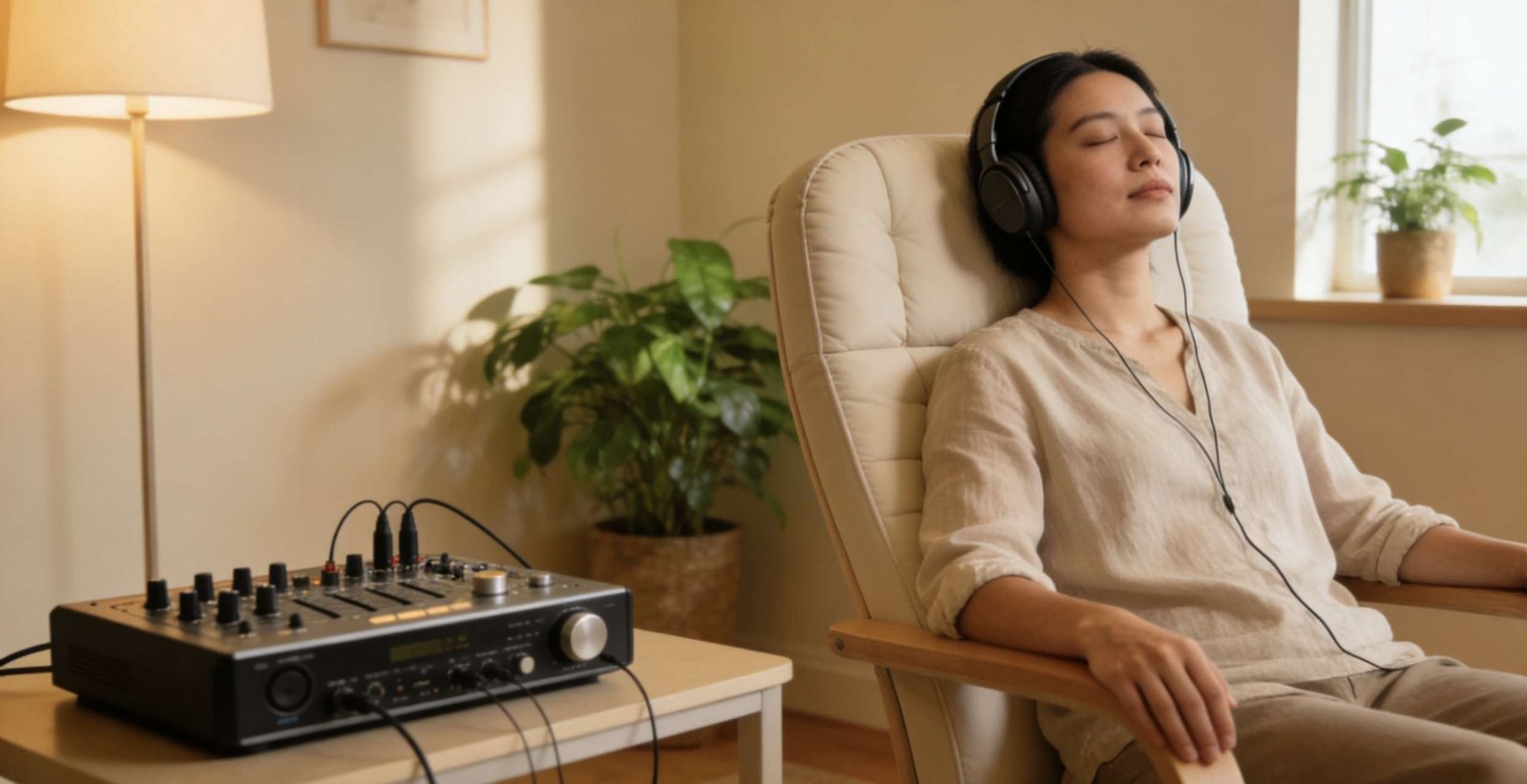
The important word is complementary. Sound therapy is studied and used as an add-on to standard care, alongside physical therapy, exercise, sleep habits, and any medication a clinician has prescribed. It is not a treatment that replaces any of those things. For a broader look at how sound is used in wellness, see our sound healing guide.
How Sound May Influence the Experience of Pain
Pain is not only a signal from the body; it is also shaped by the brain and nervous system. A pain signal travels up the spinal cord toward the thalamus, a kind of relay station, and from there spreads to regions involved in sensation, attention, and emotion. Sound is processed partly in the auditory cortex, which communicates closely with these same networks.

Researchers have proposed a few overlapping explanations for why organized sound may help some people feel more comfortable:
- Relaxation response: slow, predictable sound can support the parasympathetic “rest and recover” state, which may ease muscle tension and temporarily soften the stress response.
- Attention and mood: engaging audio can draw attention away from discomfort, and lower anxiety often makes pain feel less overwhelming.
- Mechanoreceptor stimulation: felt low-frequency vibration stimulates touch and pressure receptors, which can interact with pain gating in the nervous system.
- Sleep and rhythm: calming audio before bed can improve relaxation and sleep, and poor sleep reliably makes pain feel worse the next day.
Some research also explores rhythmic entrainment of brain activity, including frequencies around 40 Hz. These mechanisms are plausible and actively studied, but it is too early to say sound “switches off” pain. The honest summary is that sound appears to influence how pain is regulated and experienced, rather than removing its physical cause.
What the Research Actually Says
The evidence is promising but modest. A peer-reviewed clinical study of low-frequency sound stimulation in people with fibromyalgia reported improvements in pain, sleep, and mobility over the study period, with no serious adverse effects (view the study on PubMed Central). A separate pilot study examined music combined with low-frequency vibration for chronic musculoskeletal pain in older adults and found it was well tolerated as an add-on to usual care (PubMed Central).
A few honest caveats matter. Many of these studies are small pilot projects rather than large randomized trials, methods and frequencies differ, and results vary between individuals. Importantly, when participants in formal programs change their medication, that happens under medical supervision and as part of the study design. No reputable study suggests that you should reduce or stop prescribed pain medicine on your own because you listened to sound frequencies. Think of the research as a reason to discuss sound therapy with your clinician, not a reason to self-adjust drugs.
How I Used Sound Therapy for 30 Days
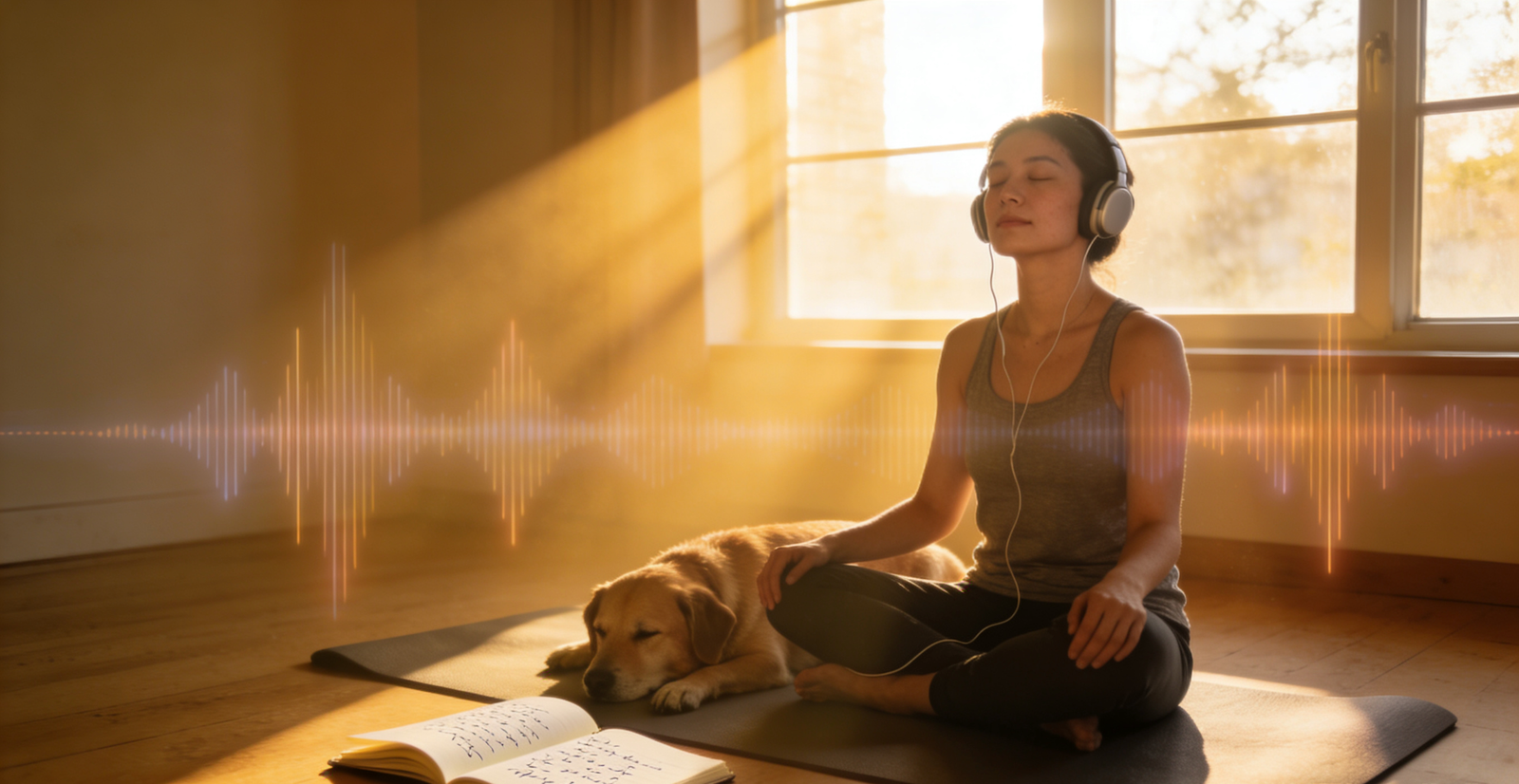
My setup was deliberately simple and low cost: a sound-therapy app, noise-cancelling headphones, and twenty minutes once or twice a day, usually lying down in a dim room. I tended to choose low-frequency and 40 Hz-style sessions in the evening, and I kept a short journal rating pain (0–10), sleep quality, and stress. Throughout the entire month I continued my prescribed treatment exactly as directed and did not change any dose myself; sound was an extra layer, not a substitute.
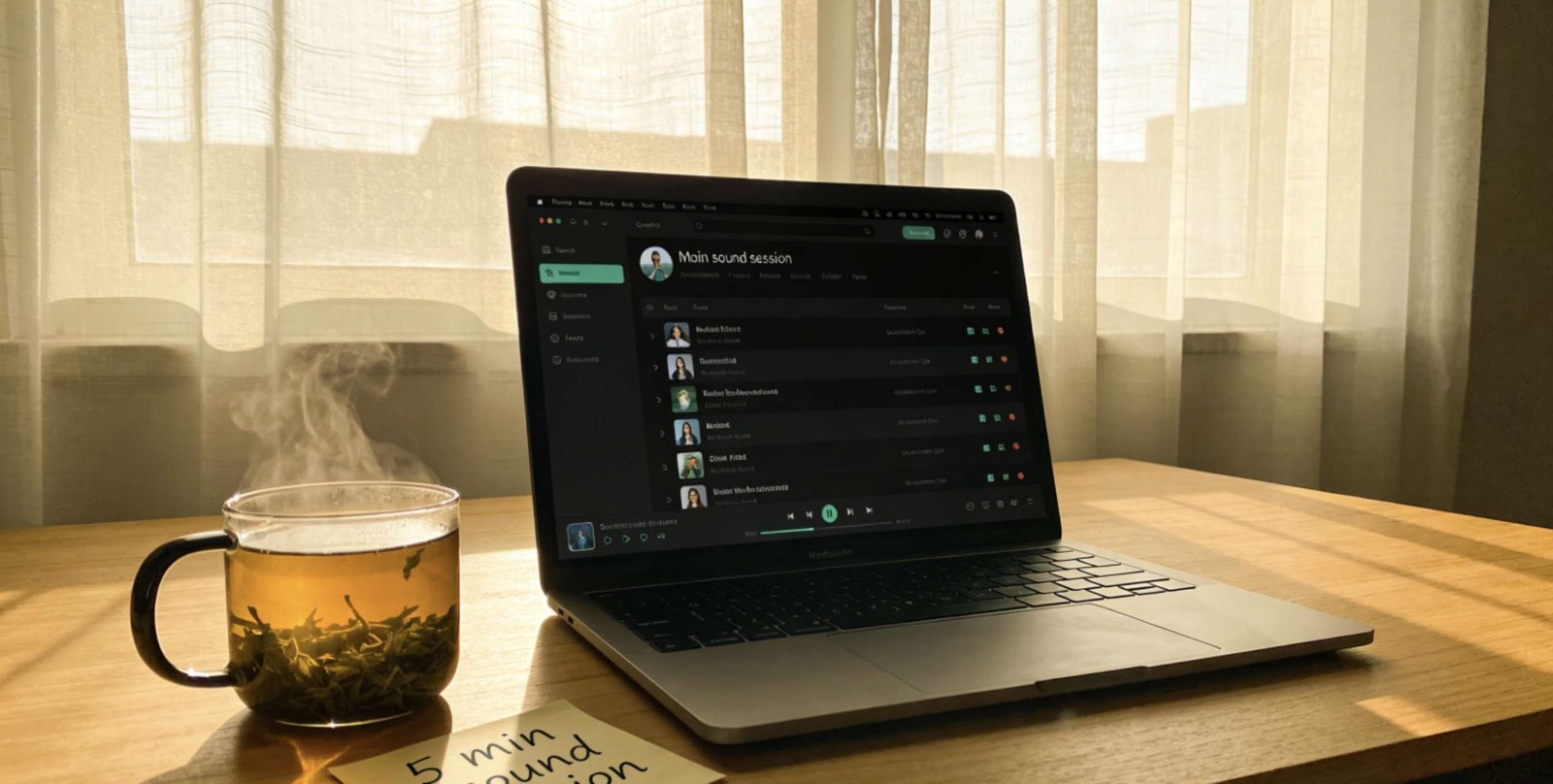
Week 1: Skepticism
The hum felt strange at first, a deep vibration I felt more than heard. For several days I noticed nothing dramatic and wondered if I was wasting my time. I kept the sessions short and treated it like a relaxation practice rather than a treatment.
Week 2: Small Shifts
The first change was not less pain exactly, but less tension around it. Evening sessions seemed to quiet the mental buzzing of a hard day, and some nights I settled into sleep more easily. Morning stillness felt a fraction gentler. I wrote in my journal that the hum was becoming a cue to unwind.
Week 3: Better Sleep, Less Edge
Sleep was the clearest change. I fell asleep sooner after difficult days and woke feeling less clenched. Because poor sleep amplifies pain, better rest made my daytime coping feel easier. I was still sore, but the stress-and-pain loop felt less tight.
Week 4: One Tool Among Many
By the end, sound therapy had become a regular comfort measure, alongside stretching, short walks, and the treatment plan my clinician supervised. My pain had not disappeared, but my sense of being overwhelmed by it had eased, and that genuinely improved my days.
Remember that this is a single personal account (n = 1), not evidence. Your results may be larger or smaller, and a journal of your own is the best way to know whether it helps you.
Is Sound Therapy Safe? Who Should Be Cautious
Low-volume recorded sound is generally low risk for most adults, but it is not for every situation:
- Never adjust medication yourself. If you take opioids or other prescription pain medicine, any reduction must be planned with your prescriber; some medicines must be tapered carefully.
- Protect your hearing. Keep headphones at a comfortable volume and avoid prolonged high levels.
- Tinnitus or hearing conditions: certain tones can irritate tinnitus; stop if symptoms worsen.
- Strong vibration devices: if you use vibroacoustic chairs or mats and you have implanted devices, are pregnant, or have a serious medical condition, check with your clinician first.
- Trauma or anxiety: immersive sound can occasionally surface strong emotions; use a safe setting and stop if you feel distressed.
When to Seek Medical Care
Sound sessions are for the everyday management of stable, diagnosed pain, not for ignoring warning signs. Get prompt medical attention if you experience pain that is sudden, severe, or clearly different from your usual pattern; pain after a fall or injury; new weakness, numbness, or tingling; loss of bladder or bowel control or numbness around the groin; unexplained weight loss, fever, or pain that consistently wakes you at night; or chest pain, shortness of breath, or dizziness. If you suspect a medication reaction or have taken more medicine than directed, contact a poison control service or emergency care immediately. These situations need a clinician, not a pair of headphones.
How to Try It Safely
- Talk to your healthcare team first, especially a pain specialist or the clinician managing your medication.
- Start low cost: a free or low-cost sound app with ordinary headphones is enough to begin; you do not need a vibroacoustic chair.
- Keep sessions comfortable: fifteen to twenty minutes in a quiet, seated or lying-down position, at a modest volume.
- Track yourself: log pain, sleep, and stress for a few weeks so you are judging by notes rather than memory.
- Keep it in context: use sound alongside sleep, gentle movement, physical therapy, and your prescribed care, not instead of them.
Frequently Asked Questions
Can sound therapy replace pain medication?
No. Sound therapy is a complementary practice, not a substitute for prescribed medicine. Never stop or reduce medication without guidance from the clinician who prescribed it, especially with opioids and other drugs that require careful tapering.
Which frequency is best for pain?
There is no single proven frequency. Around 40 Hz is among the most studied in vibroacoustic research, and low-frequency sessions from roughly 30–120 Hz are common, but studies use many different settings. Comfort and consistency matter more than chasing one number.
How long until I notice anything?
Many people feel relaxed during or right after a session, while effects on sleep and day-to-day comfort may take a few weeks of regular practice. Research and personal reports both suggest patience rather than immediate results.
Can sound therapy cure chronic pain?
No. Chronic pain usually has multiple causes and is managed rather than cured by a single tool. Sound may support relaxation, sleep, and coping, but it does not remove the underlying condition.
Do I need special equipment?
Not to begin. Headphones and a sound or music app are enough. Vibroacoustic chairs, beds, and mats are professional or higher-cost options that deliver felt vibration and are worth exploring only if the practice already helps you.
Are there side effects?
Serious side effects are uncommon at comfortable volumes. A few people report mild dizziness, ear fullness, or heightened emotion, and loud volume can damage hearing. Stop and seek professional advice if symptoms worsen.
Final Thoughts
Sound therapy did not cure my chronic pain or remove my need for medical care, and I would not trust anything that promised that. What it gave me was a practical, drug-free way to support relaxation and sleep, feel less overwhelmed, and take a little more ownership of my days while staying within the treatment plan my clinician supervised.
If chronic pain is part of your life, it is reasonable to explore sound as one tool in a broader plan, with patience and professional guidance. You may also enjoy our guide to 432 Hz music for daily wellness and the full sound healing guide.
